
Training science.
Applied to the individual.
THE SCIENCE
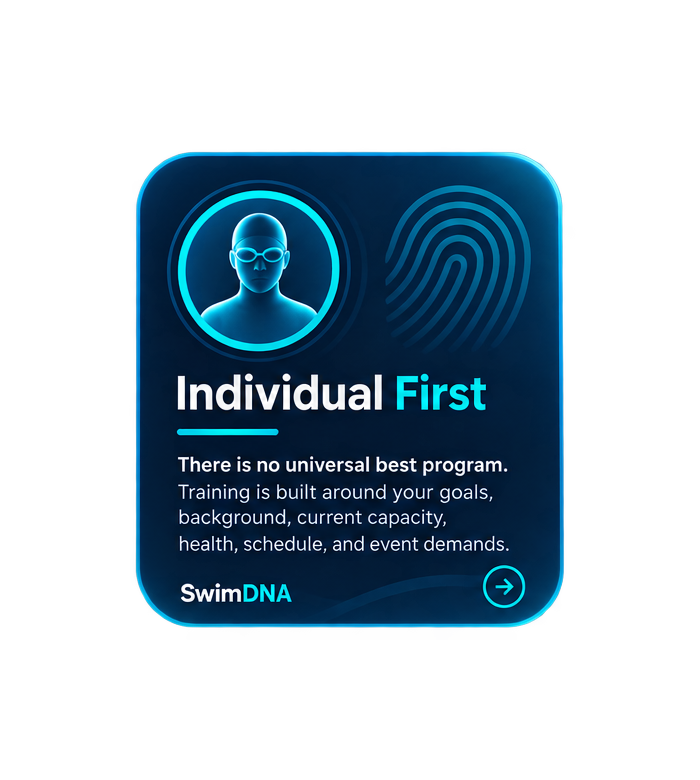
There is no single perfect swim program. Different events demand different qualities, and different swimmers respond differently to the same training.
SwimDNA applies principles of physiology, periodization, specificity, monitoring, and coaching practice to decide what makes sense for this swimmer, right now.
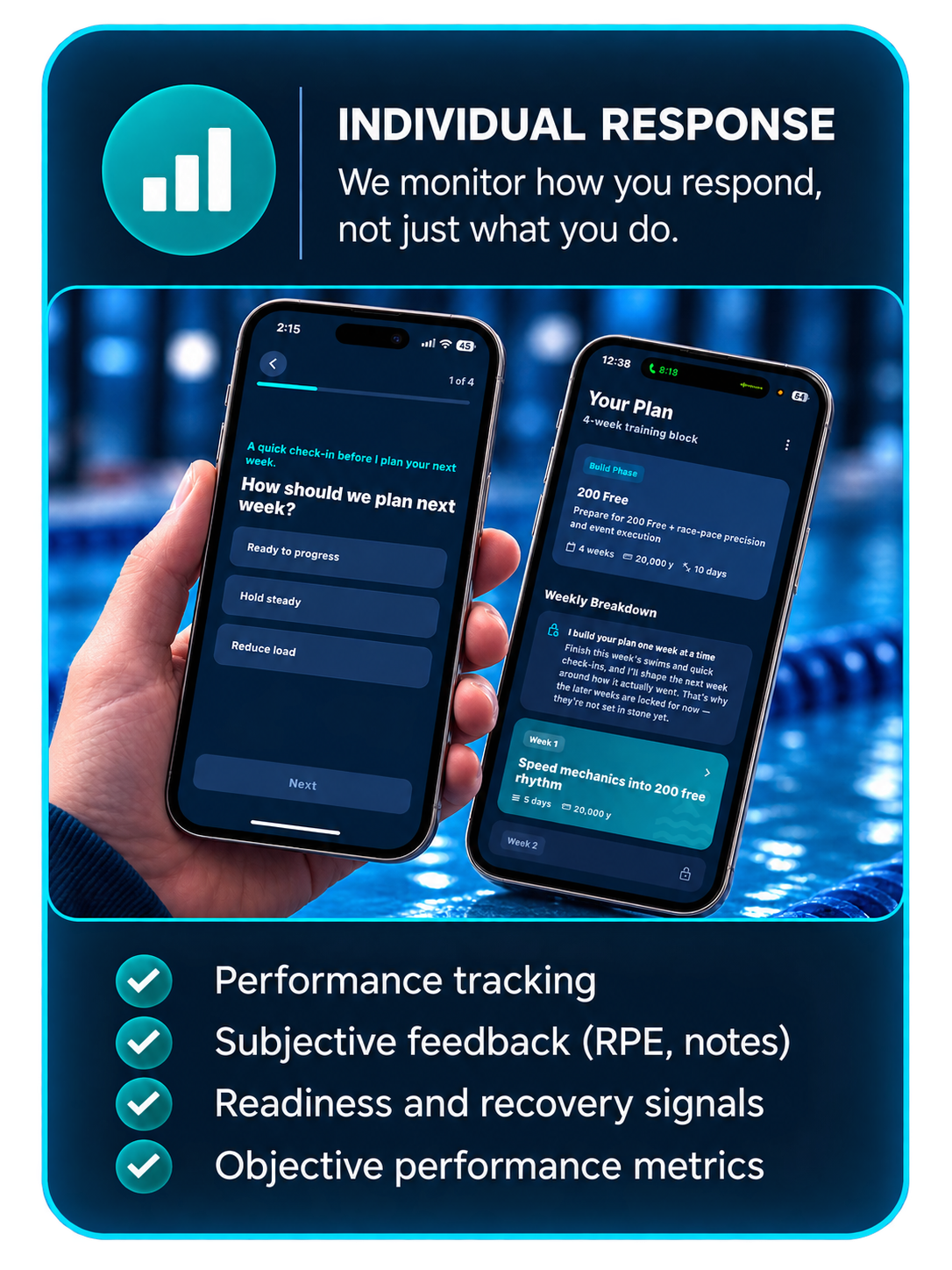
THE INDIVIDUAL RESPONSE
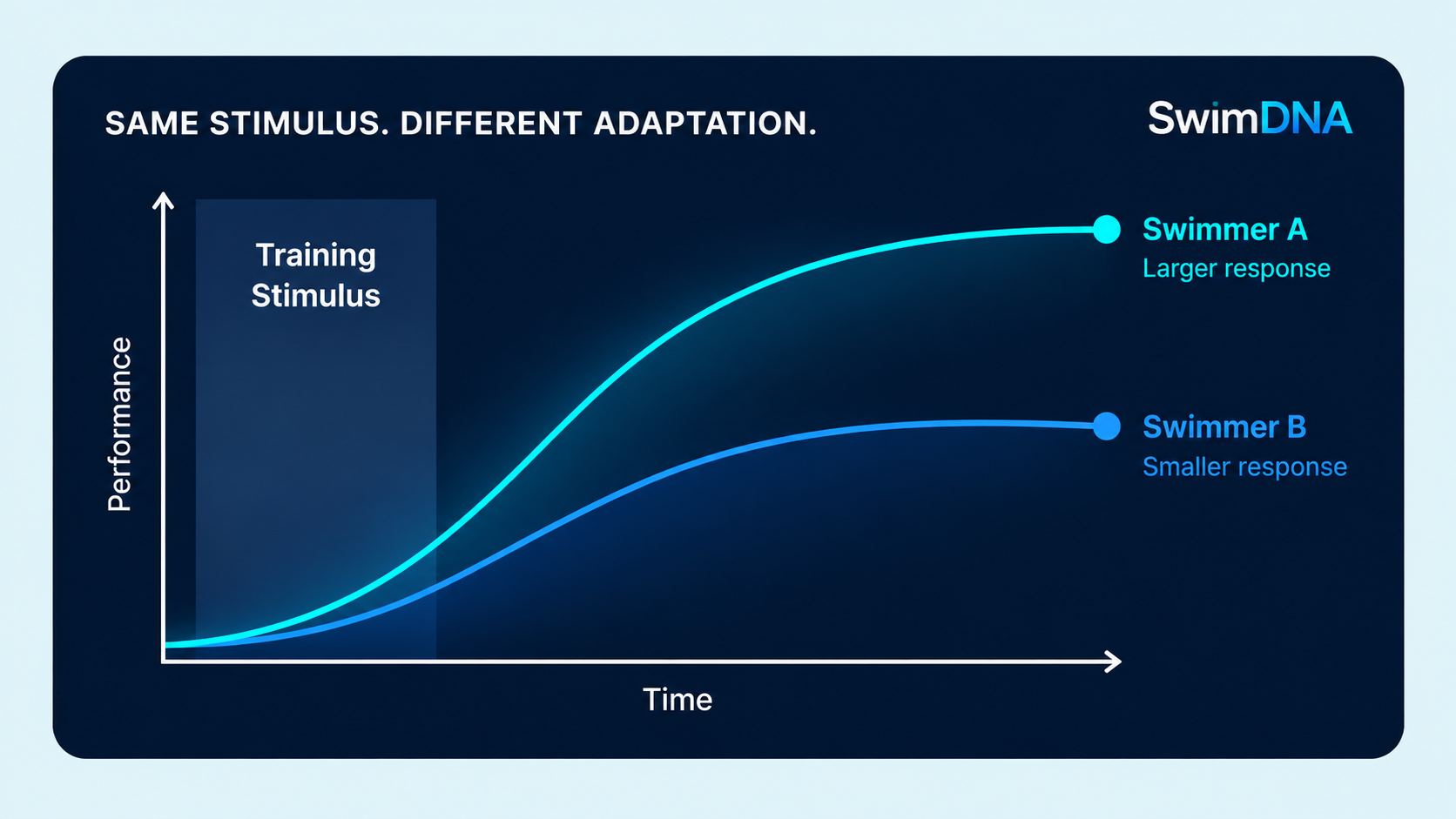
Same training.
Different response.
Training only works when the stimulus matches the athlete.
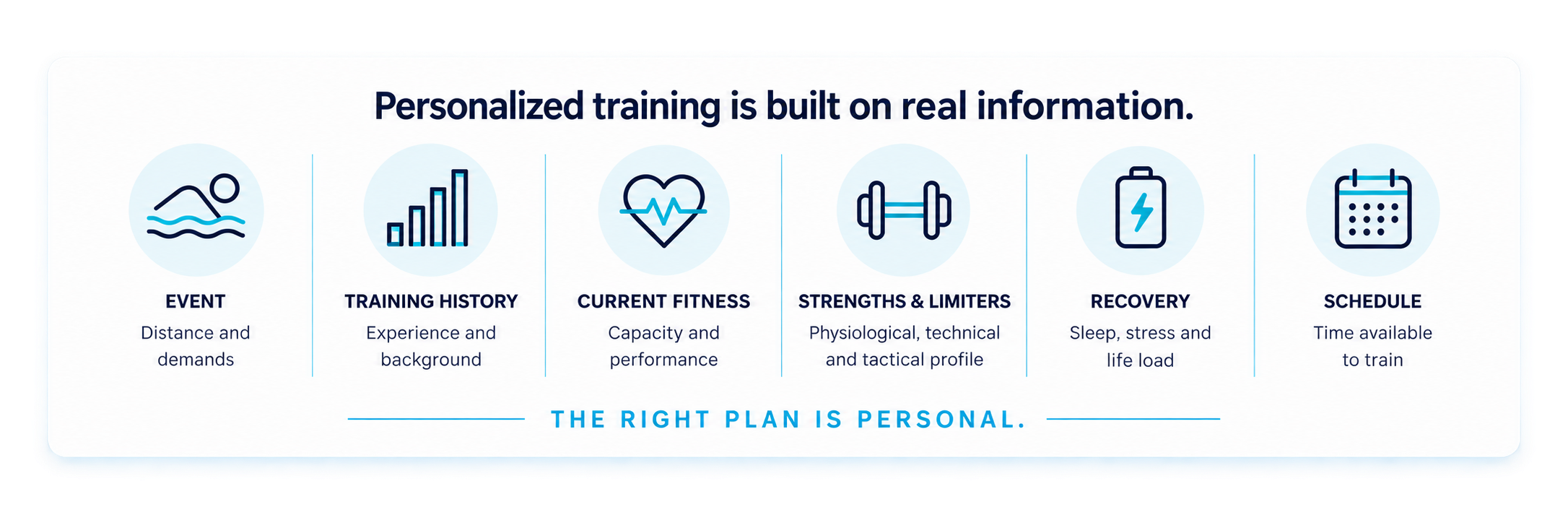
Age, training history, event demands, current fitness, strengths, limiters, recovery, schedule, and the work already being performed all influence the appropriate training dose.
The event defines the problem.
EVENT DEMANDS
Every race places a different combination of physiological, technical, and tactical demands on the swimmer.
SwimDNA builds training around what the event actually requires—so the work you do transfers to the performance you’re preparing for.
Sprint (Pool)
Short events reward speed, power, precision, and the ability to execute at very high intensity.
Speed · starts · turns · underwaters · race pace · finish
Mid-Distance (Pool)
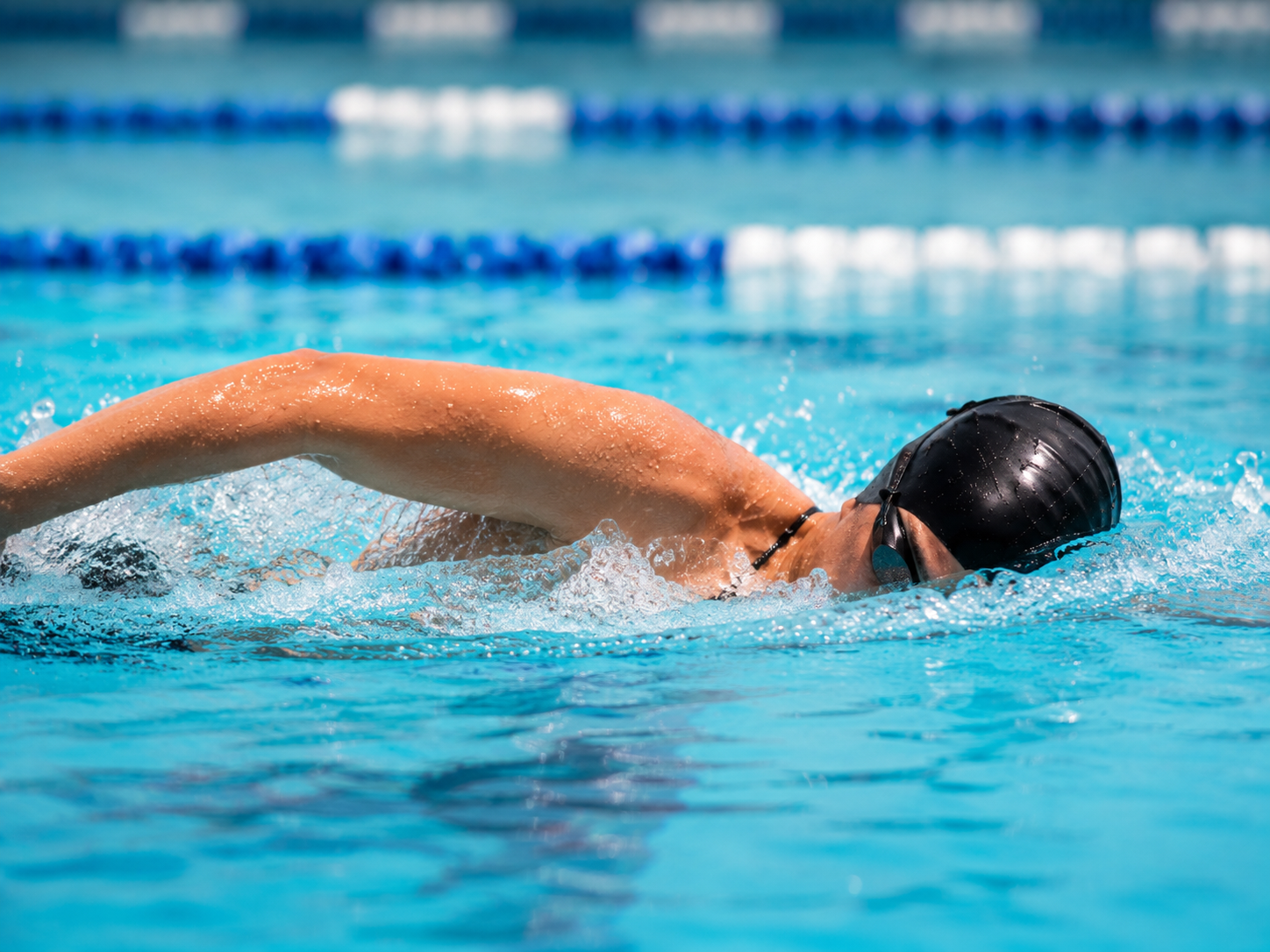
The challenge is carrying speed while controlling fatigue and maintaining efficient execution.
Aerobic support · threshold · race pace · efficiency · closing speed
Distance (Pool)
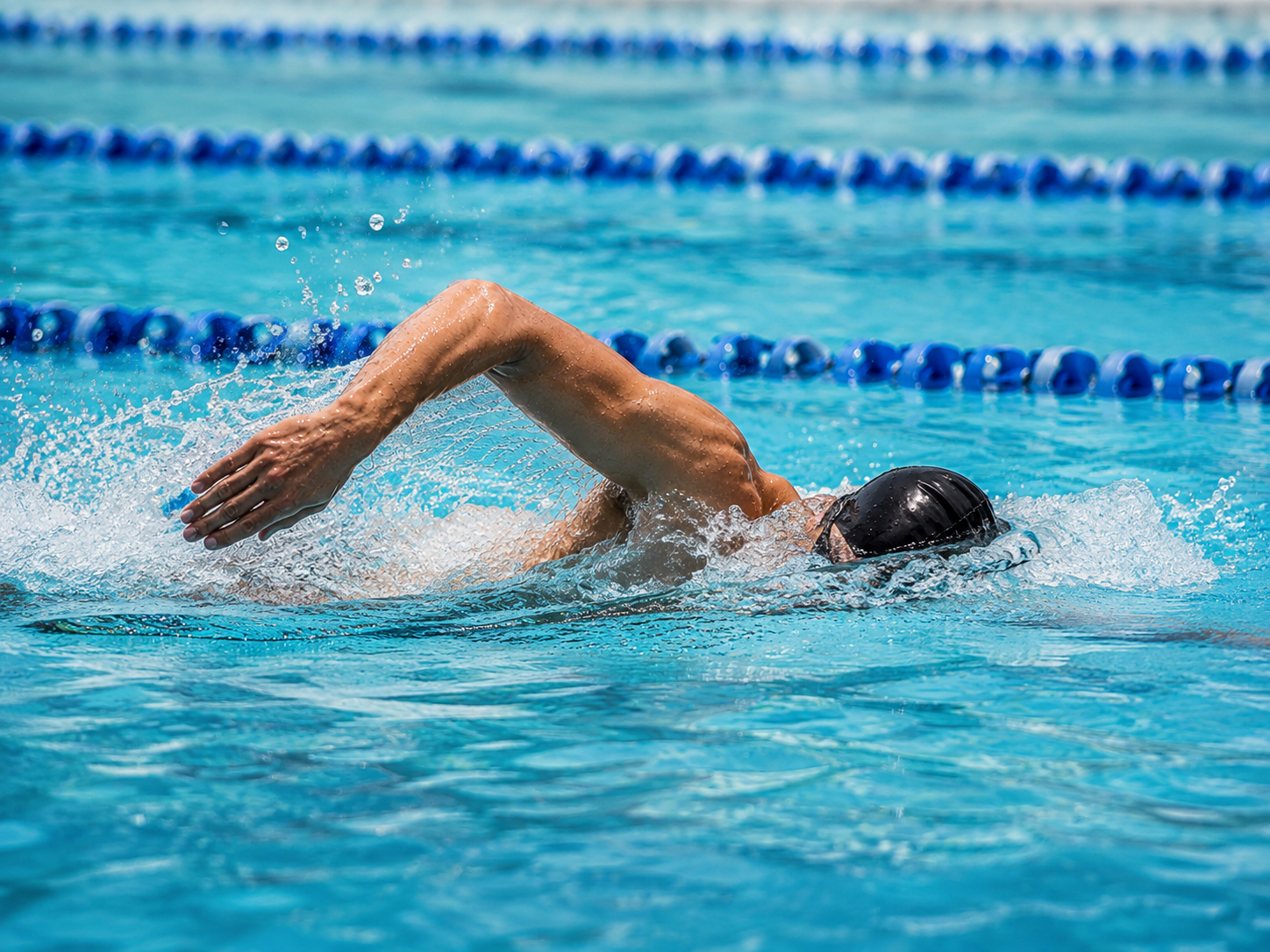
Longer racing rewards aerobic durability, efficiency, disciplined pacing, and the ability to finish without fading.
Durability · threshold support · pacing · economy · finish ability
Open Water
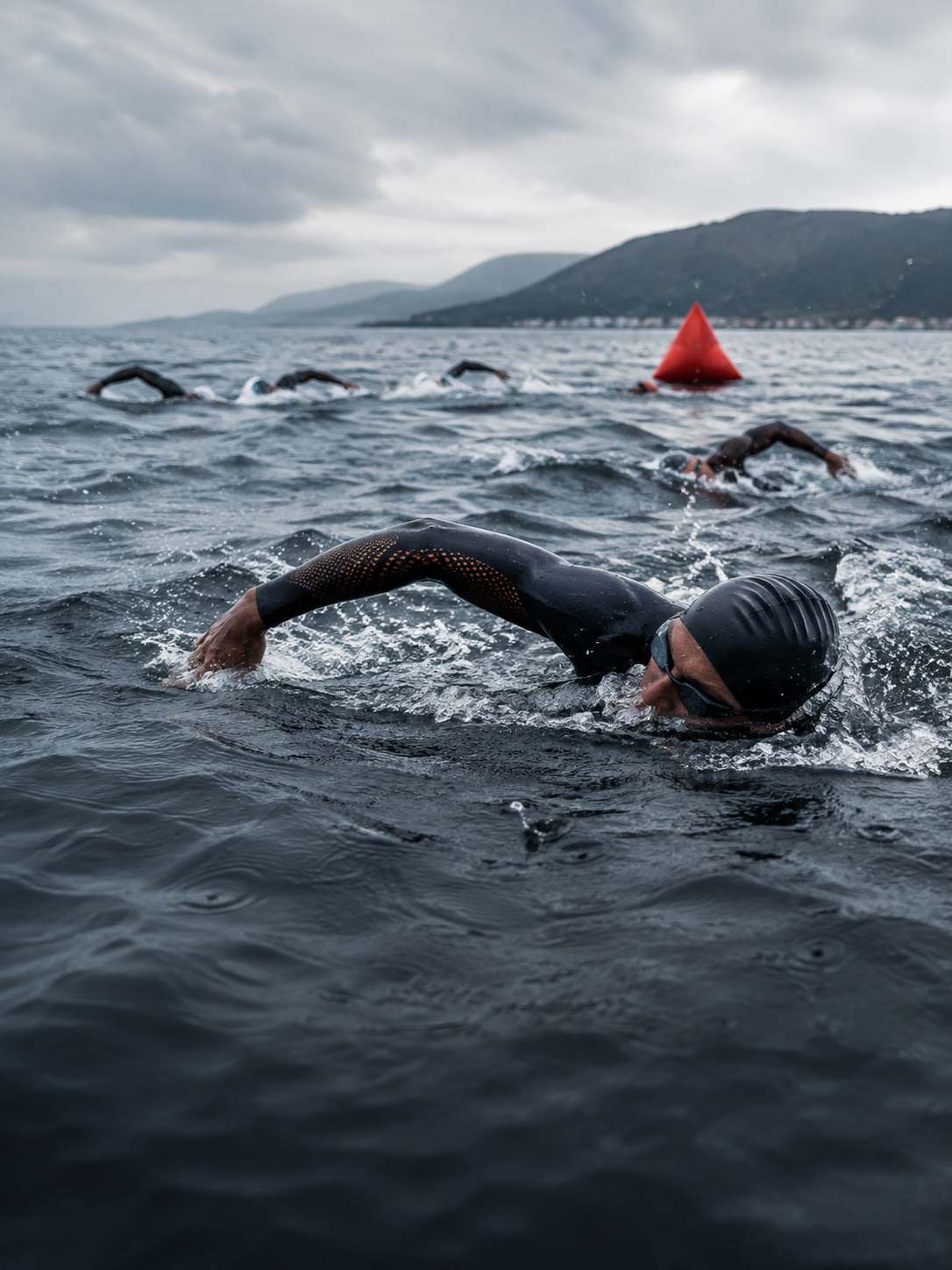
The environment becomes part of the race. Fitness has to work alongside positioning, navigation, conditions, and decision-making.
Sighting · drafting · positioning · pacing · conditions · finish judgment
Triathlon
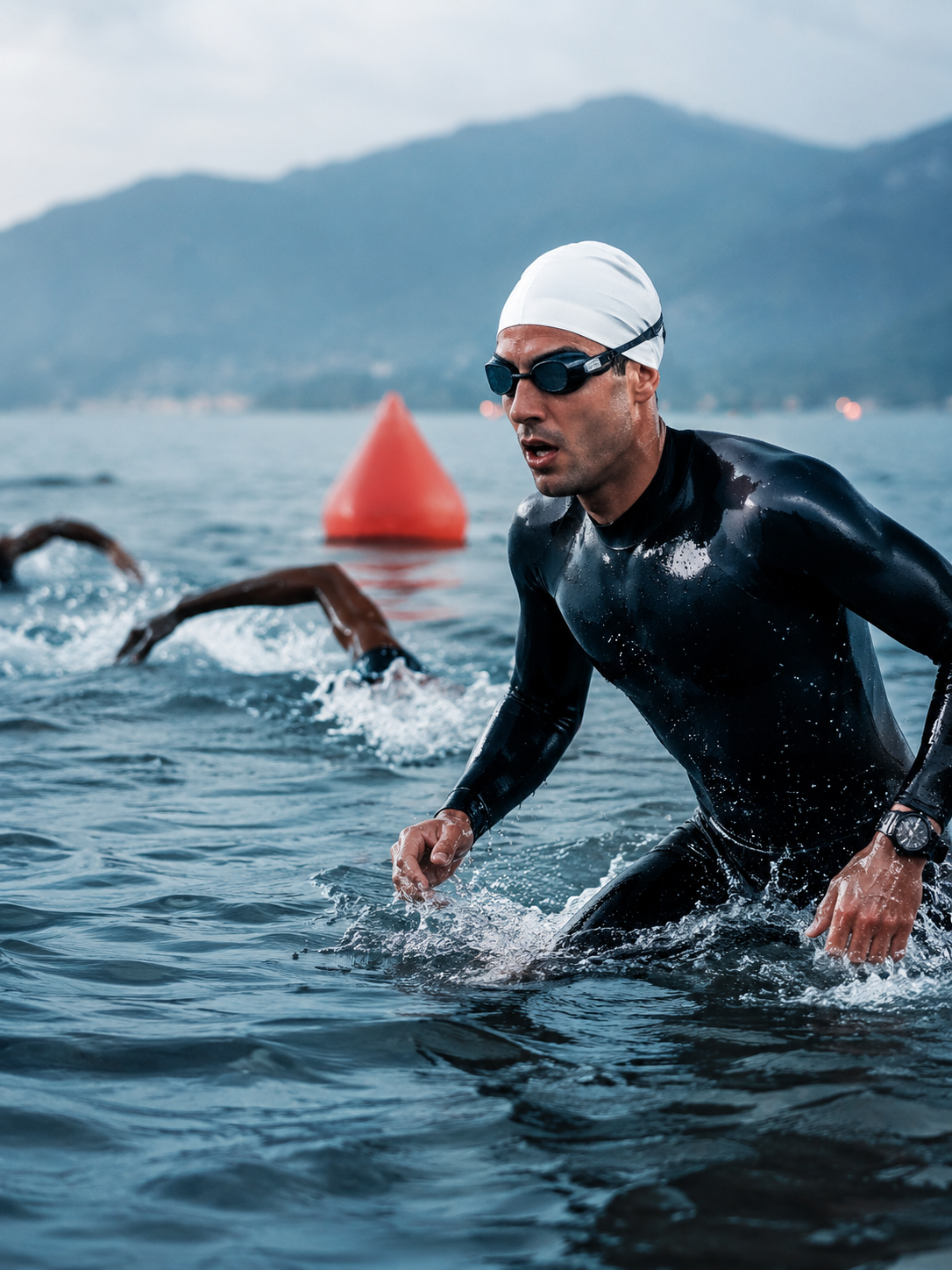
The swim is one part of the race. Training must account for swim demands, bike-run load, recovery, and what comes next.
Race pace · open-water skills · positioning · fatigue · recovery
——————
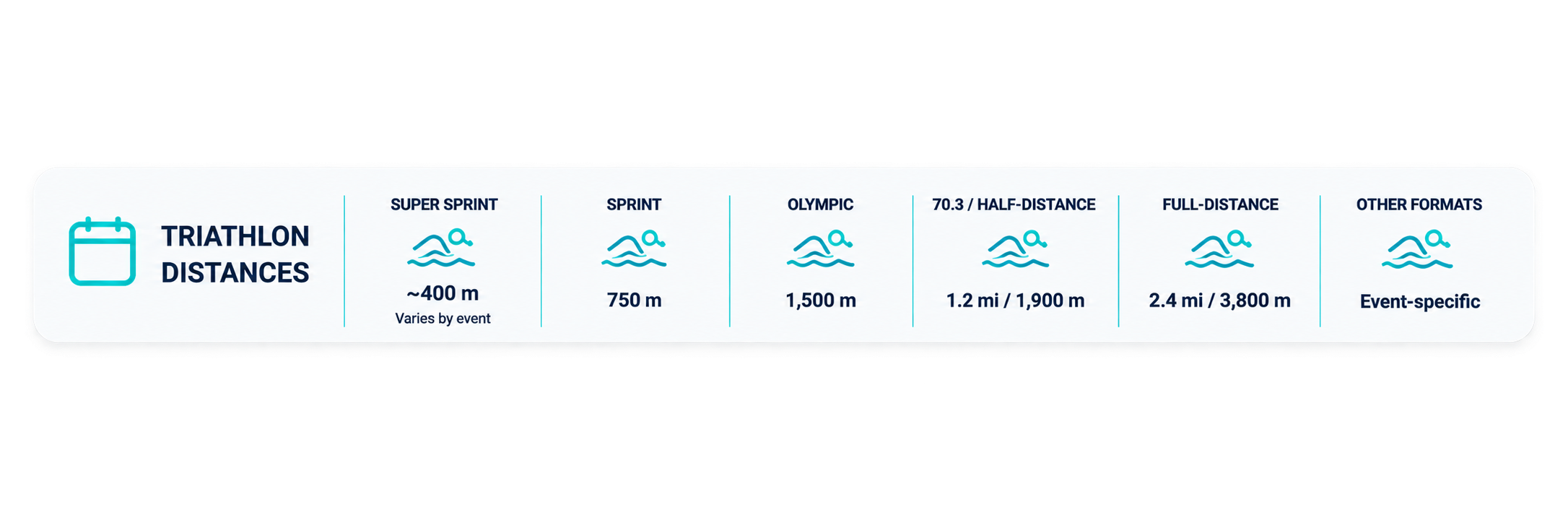
Triathlon Distances
Super Sprint, Sprint (750m), Olympic (1,500m), 70.3/Half-Distance, Full-Distance, Other Formats
The dose is the training.
THE TRAINING DOSE
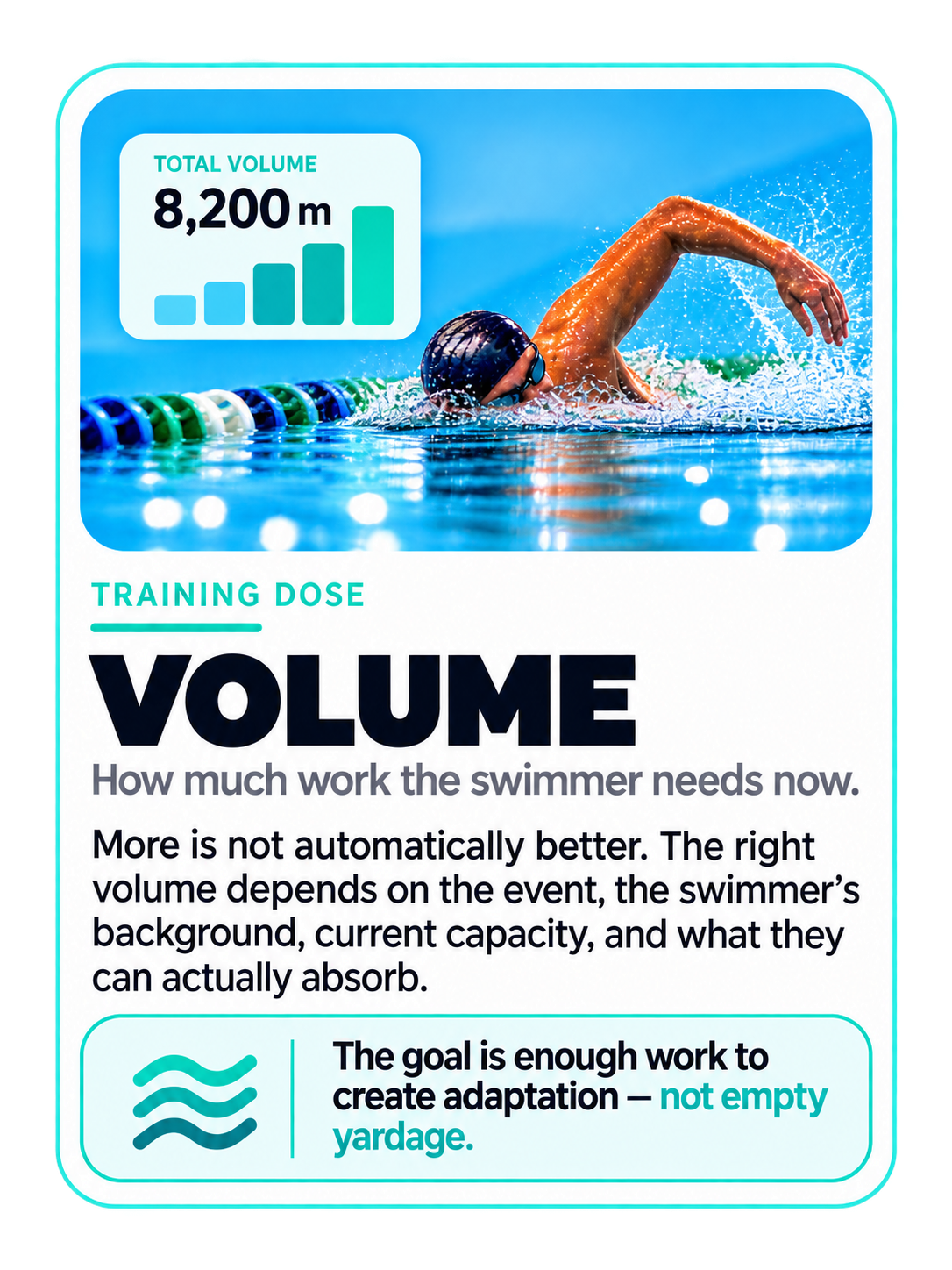
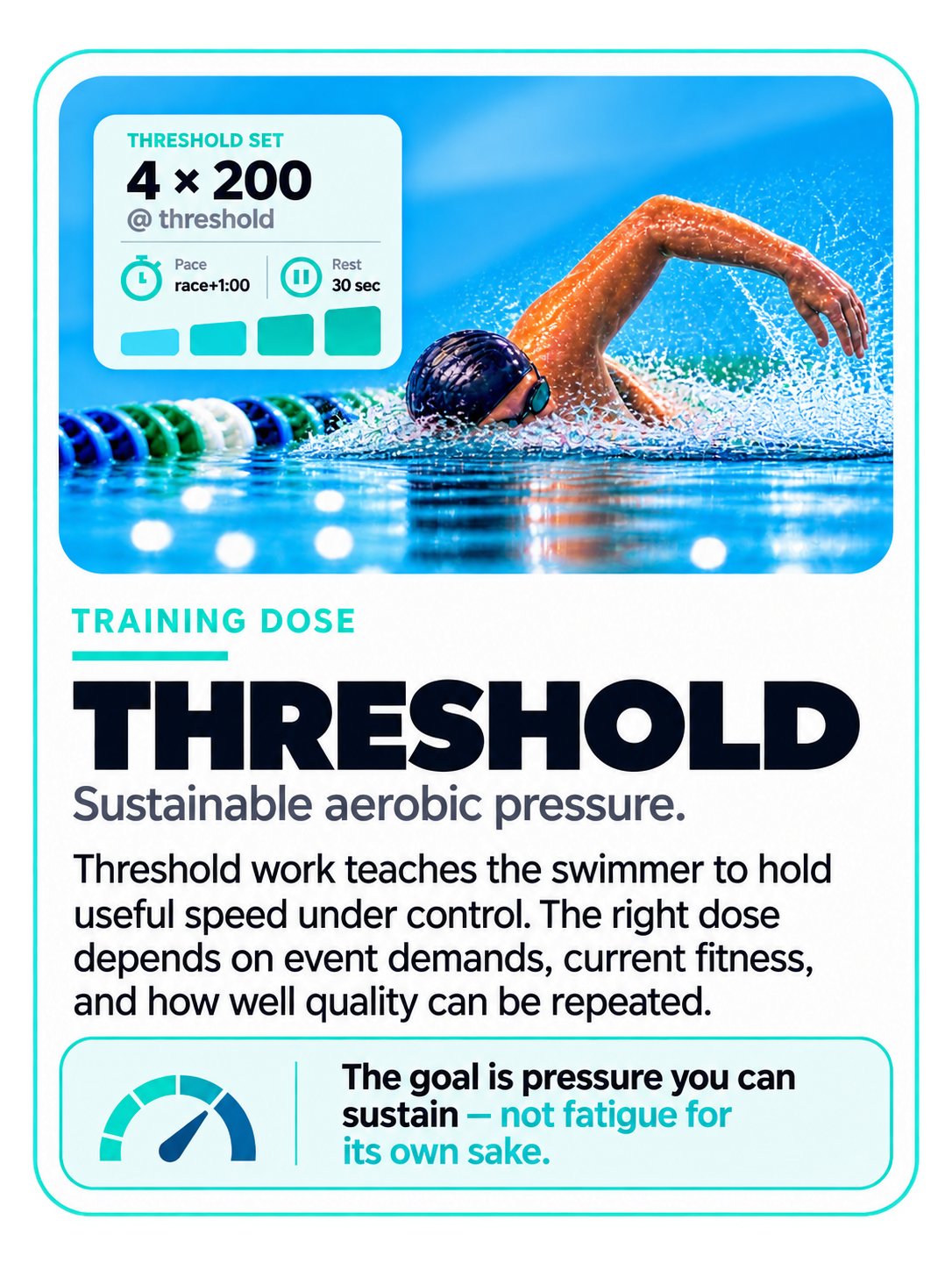
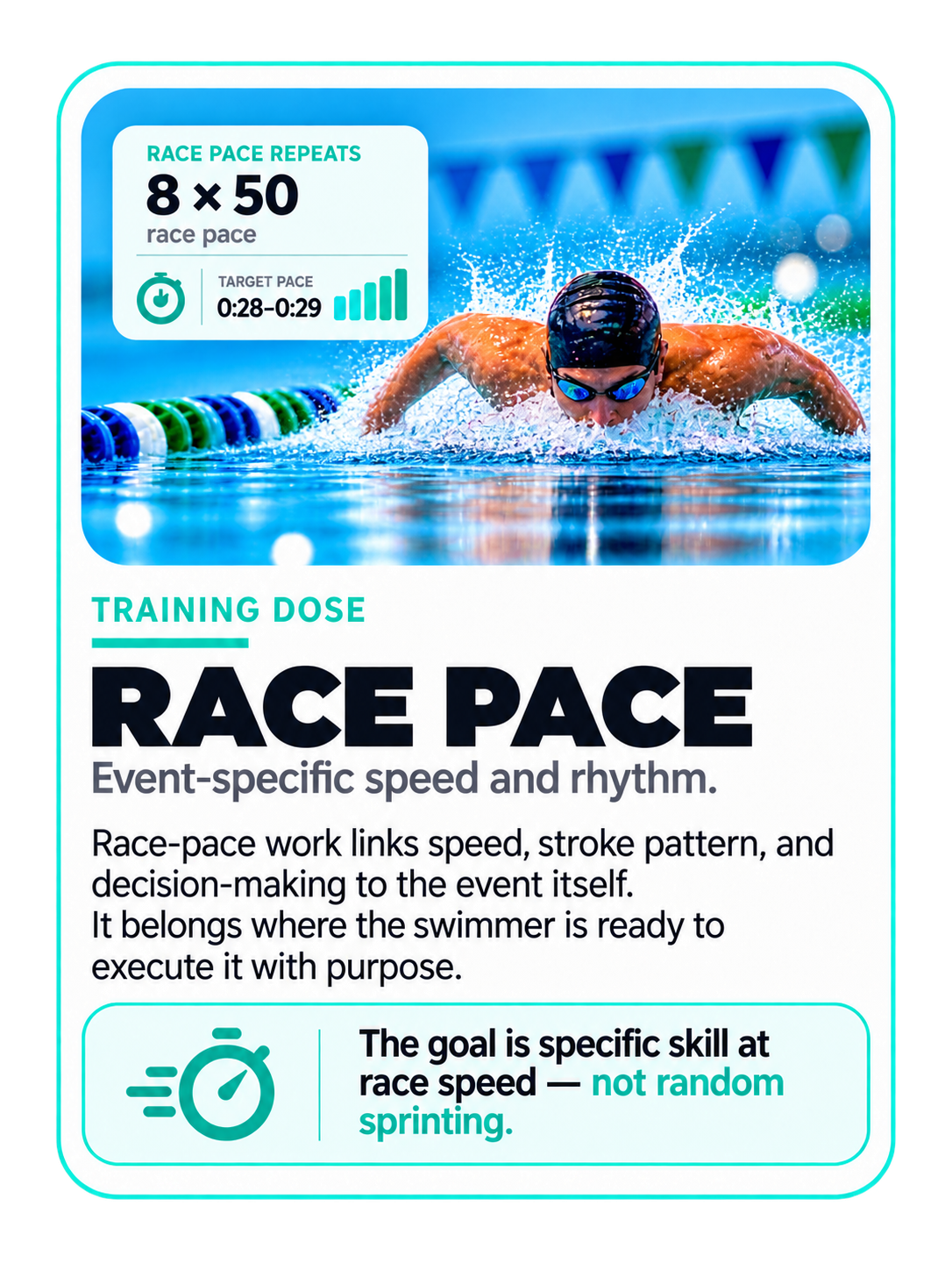
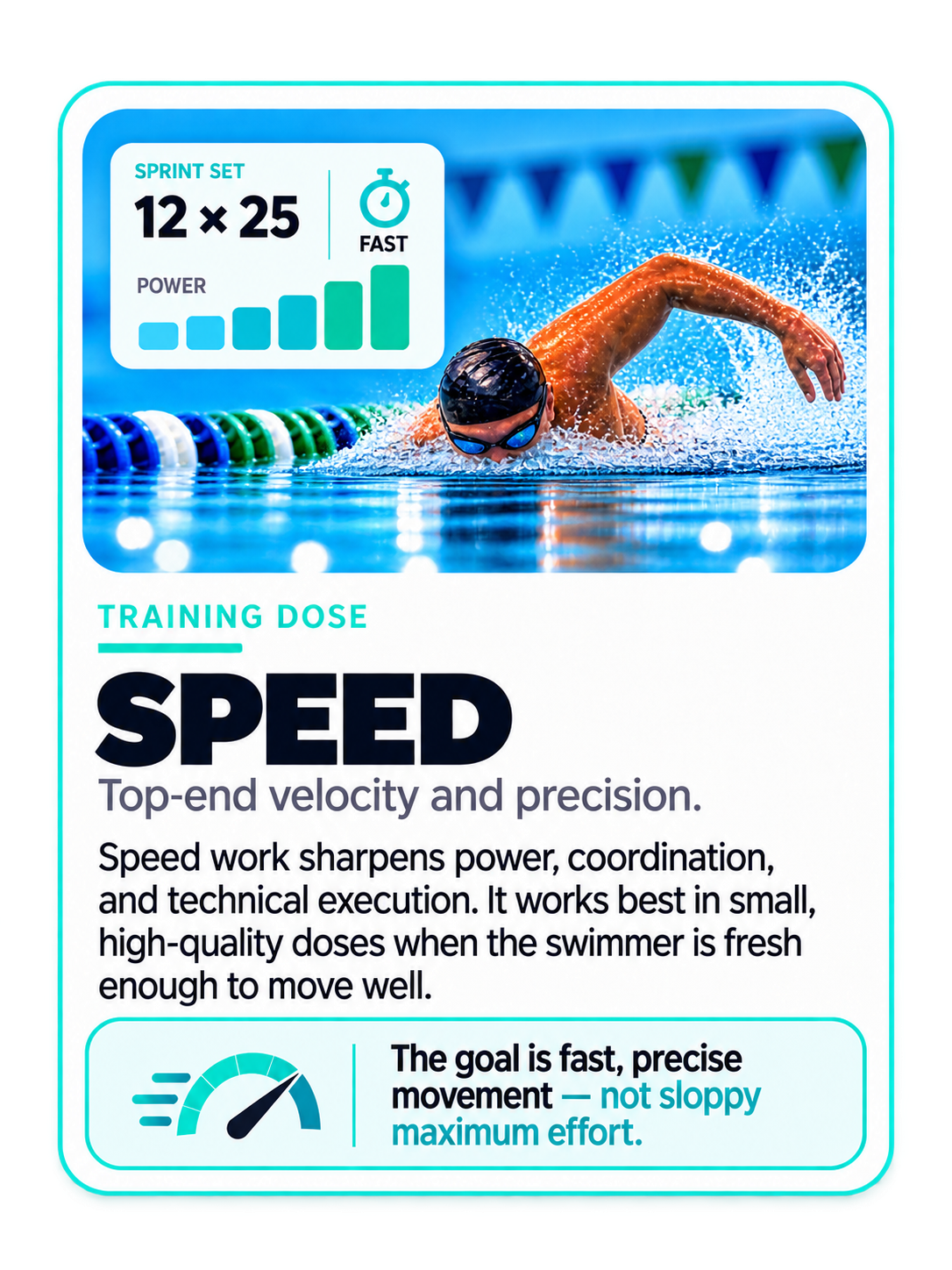
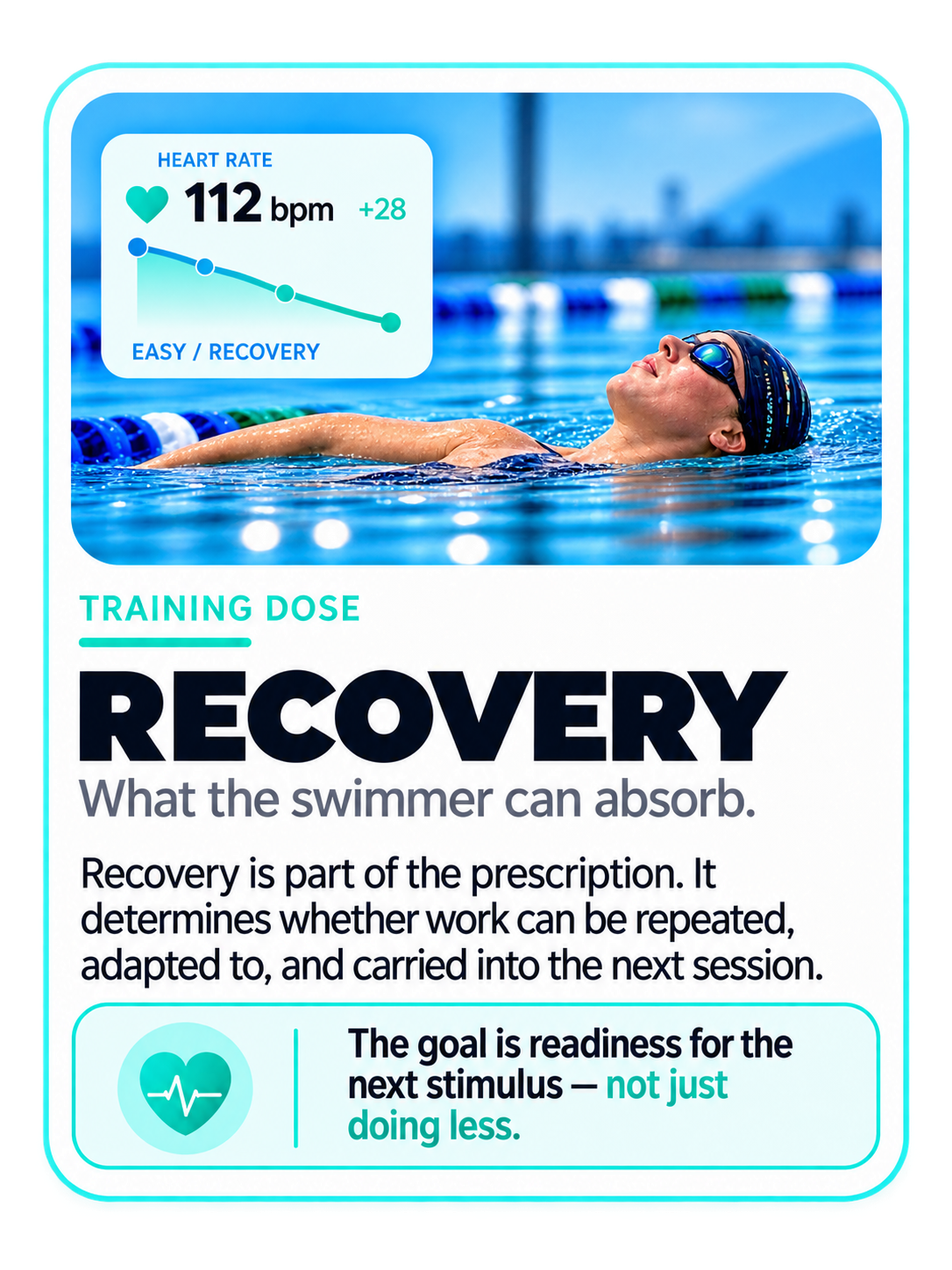
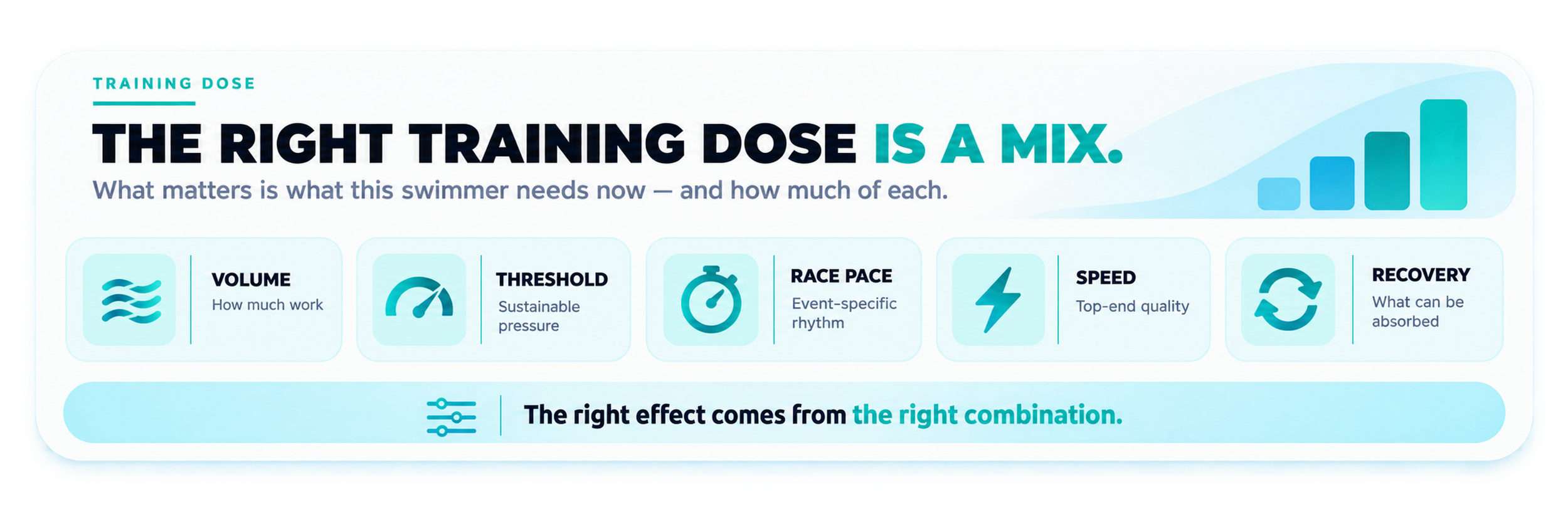
A workout is defined by more than distance or pace. The training effect changes with the amount of work, the intensity, the type of work, the recovery between efforts, and how those pieces are combined.
Personalization means changing the training stimulus—not merely changing the target time.
Performance comes from systems working together.
PERFORMANCE SYSTEMS
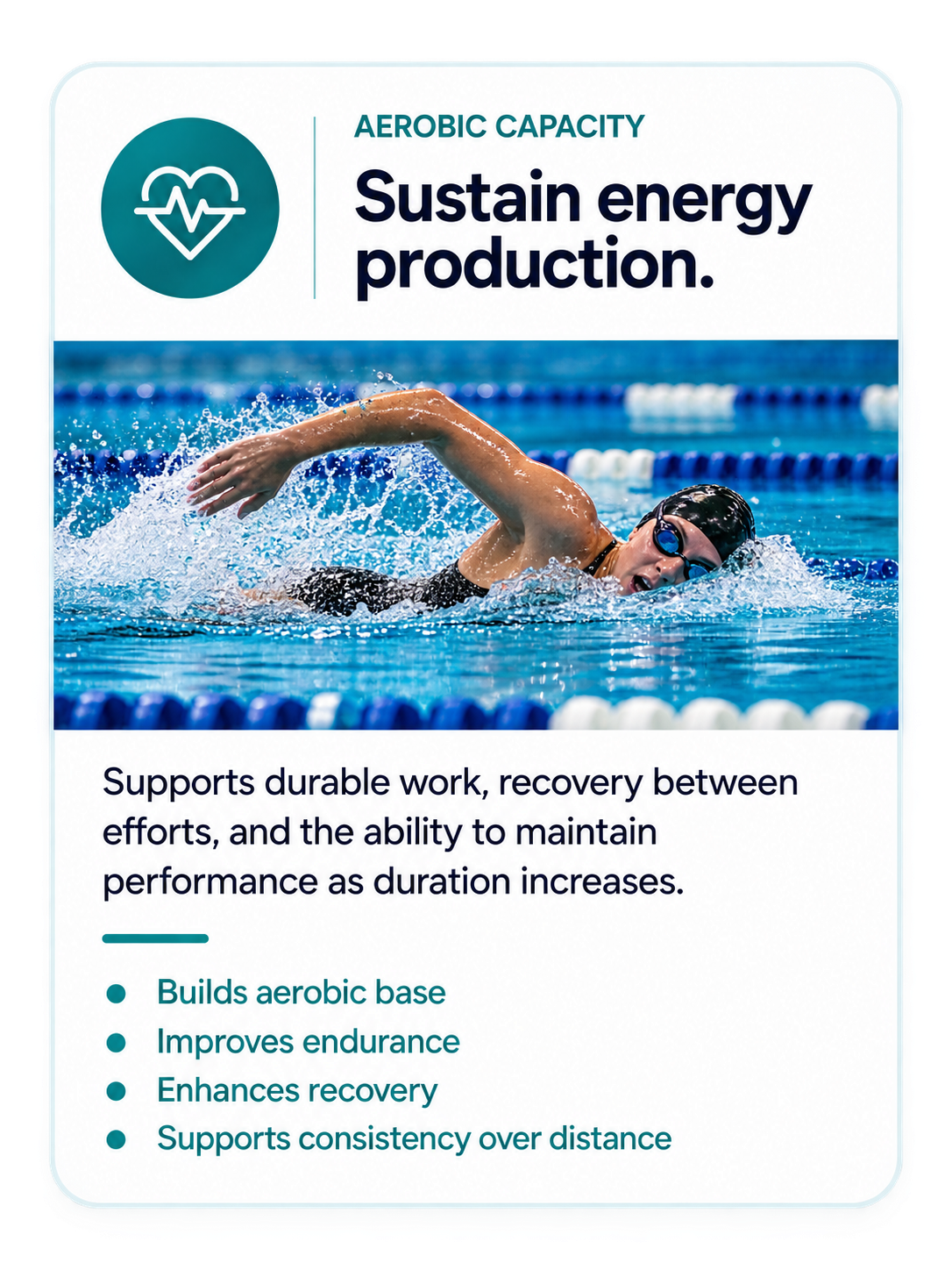
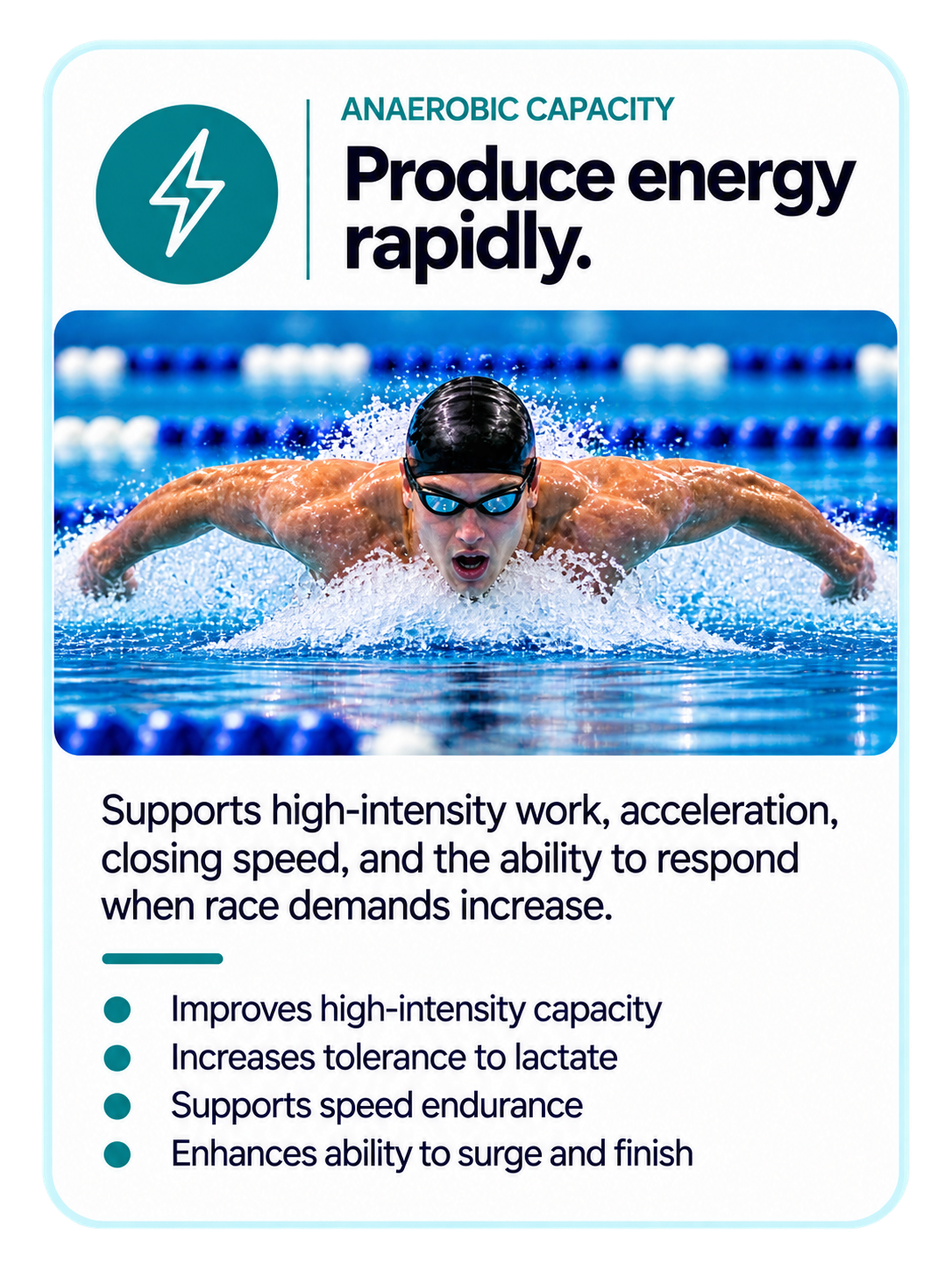
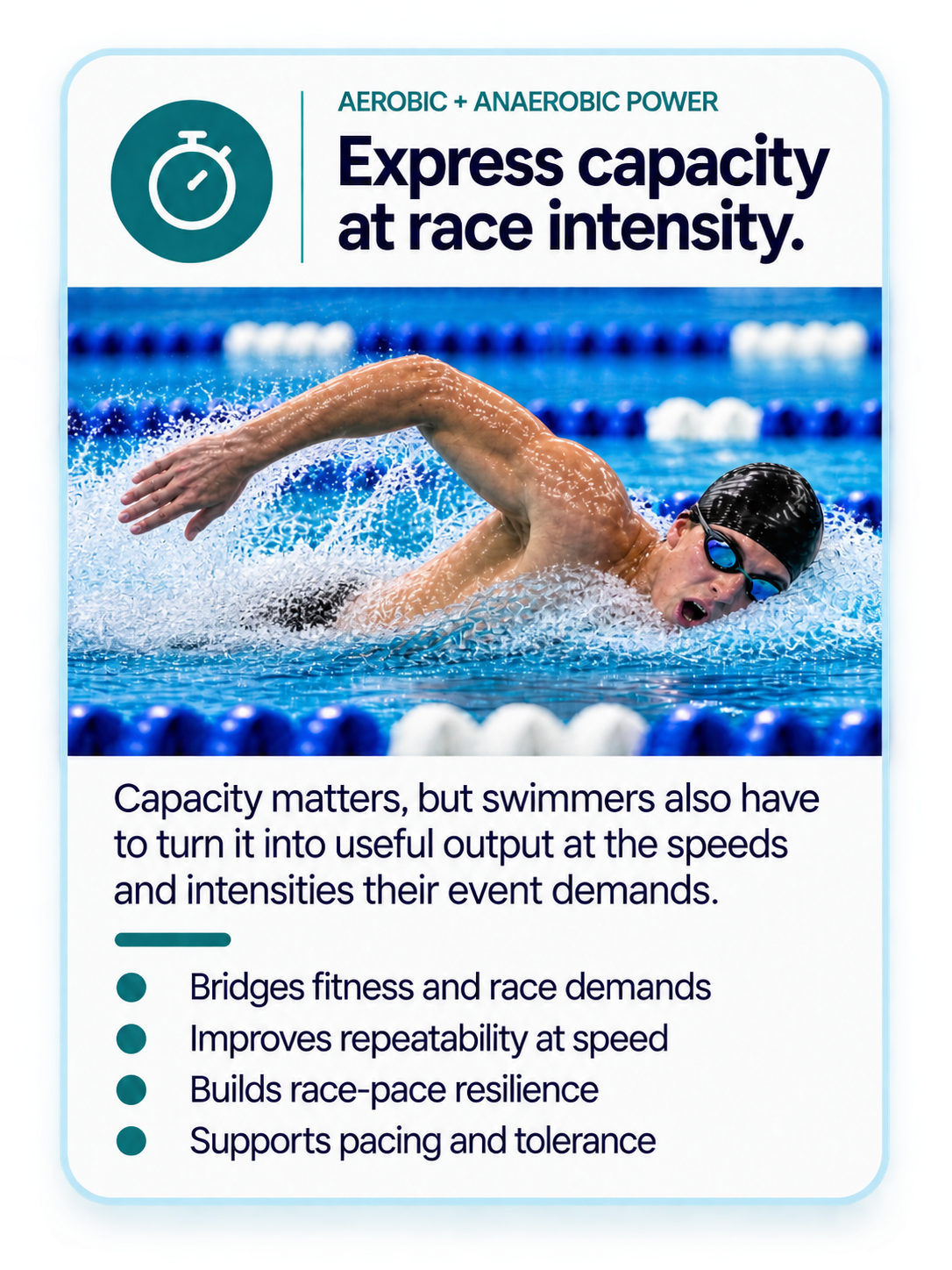
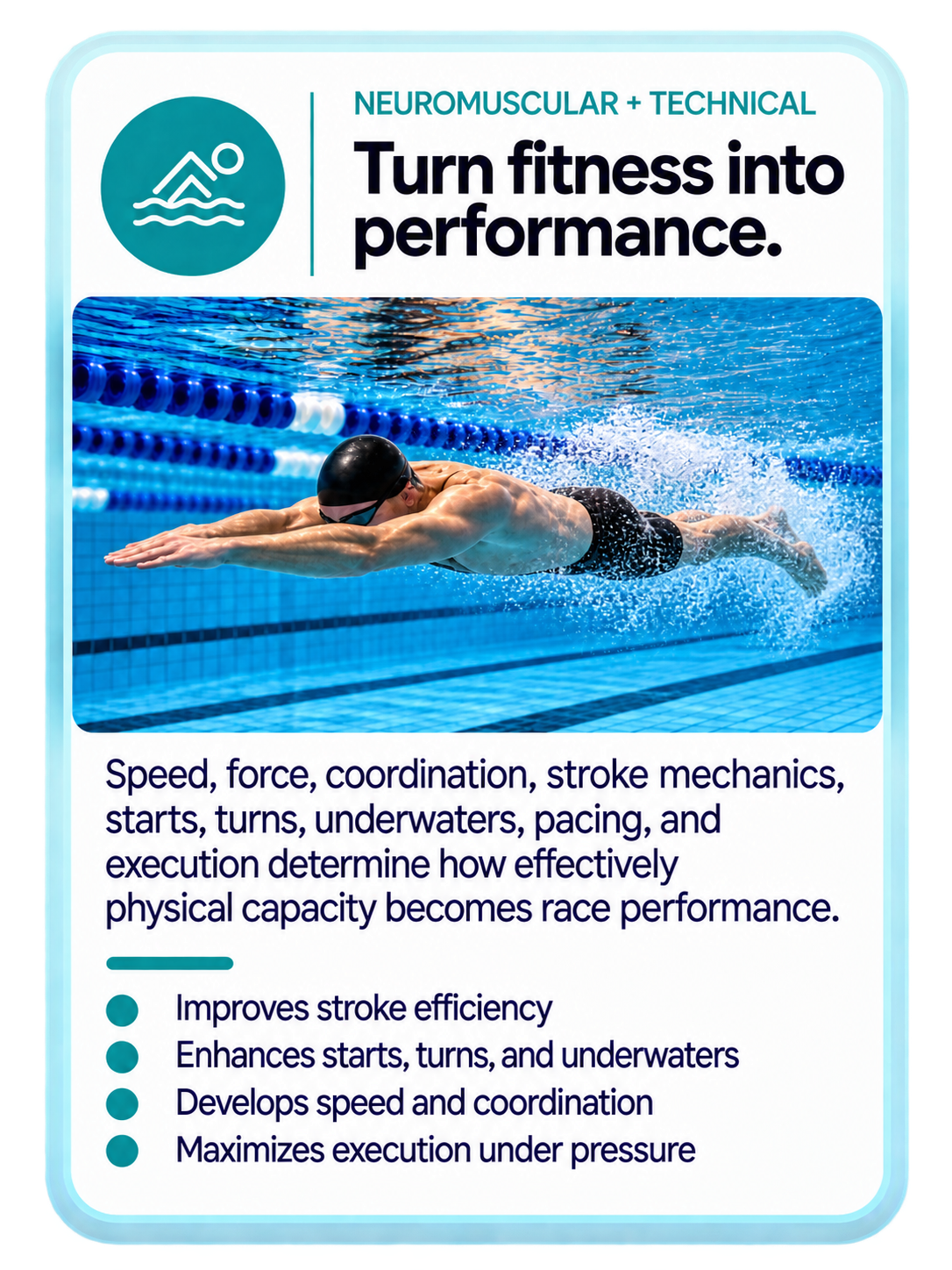
No race is powered by one quality alone.
Aerobic and anaerobic capacities, the ability to express those capacities at speed, and neuromuscular and technical execution all contribute in different proportions.
We adapt the plan.
You keep progressing.
THE ADAPTIVE PROCESS
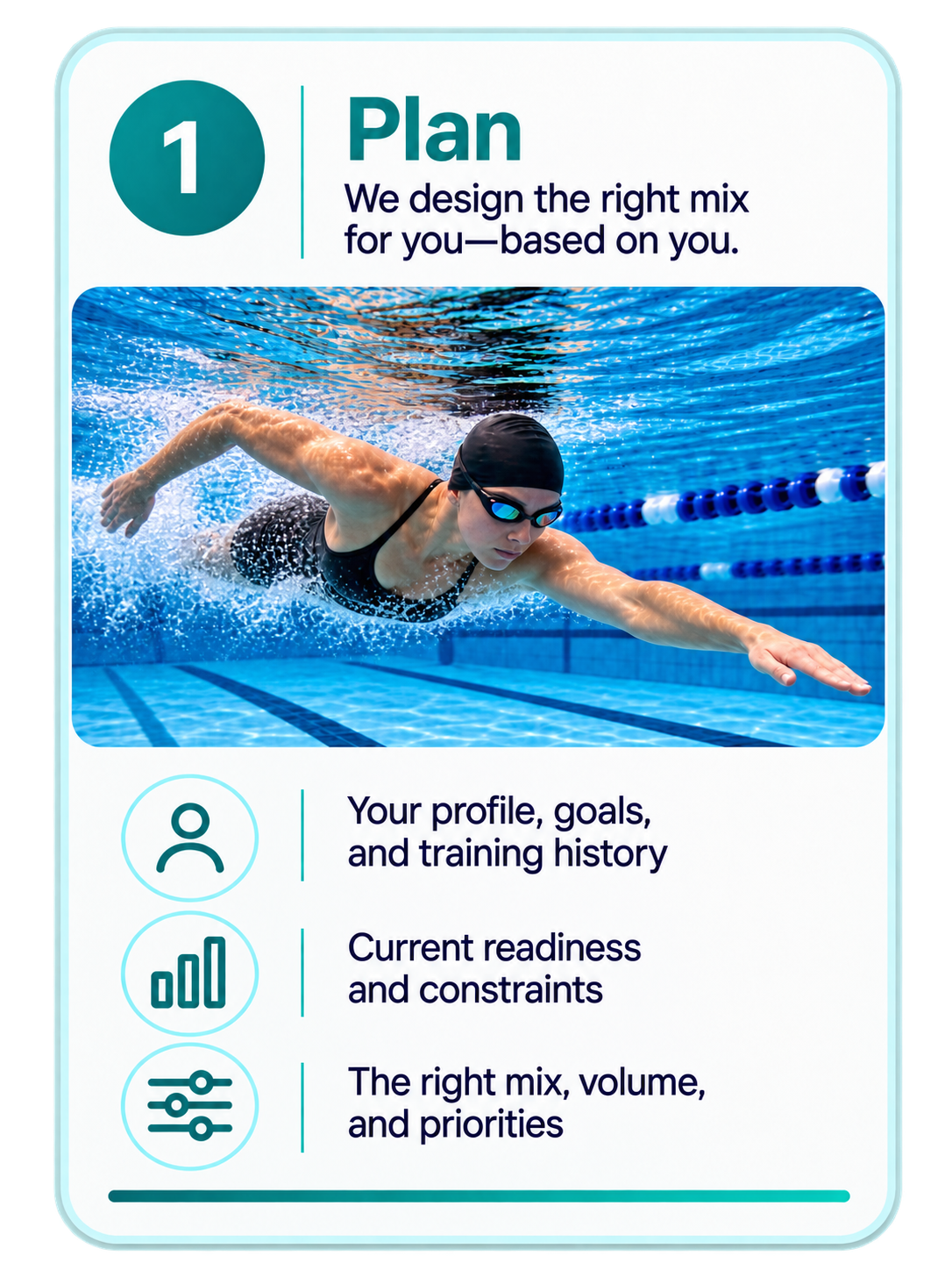
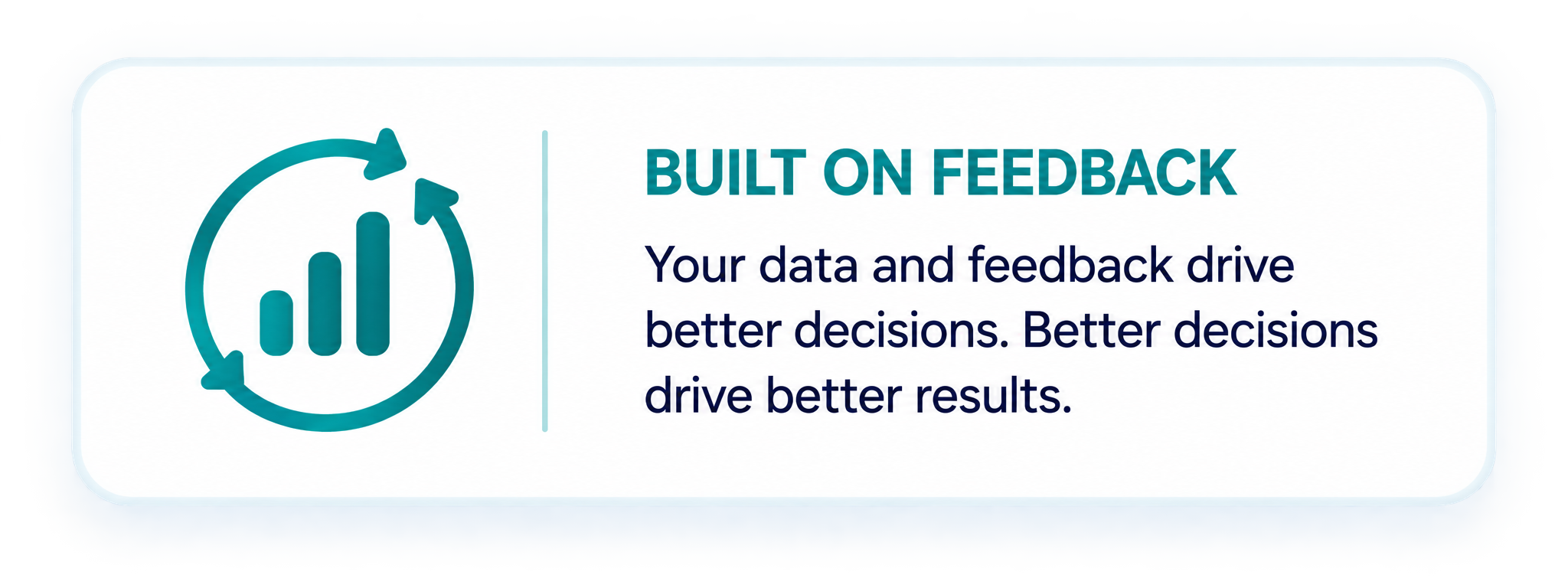
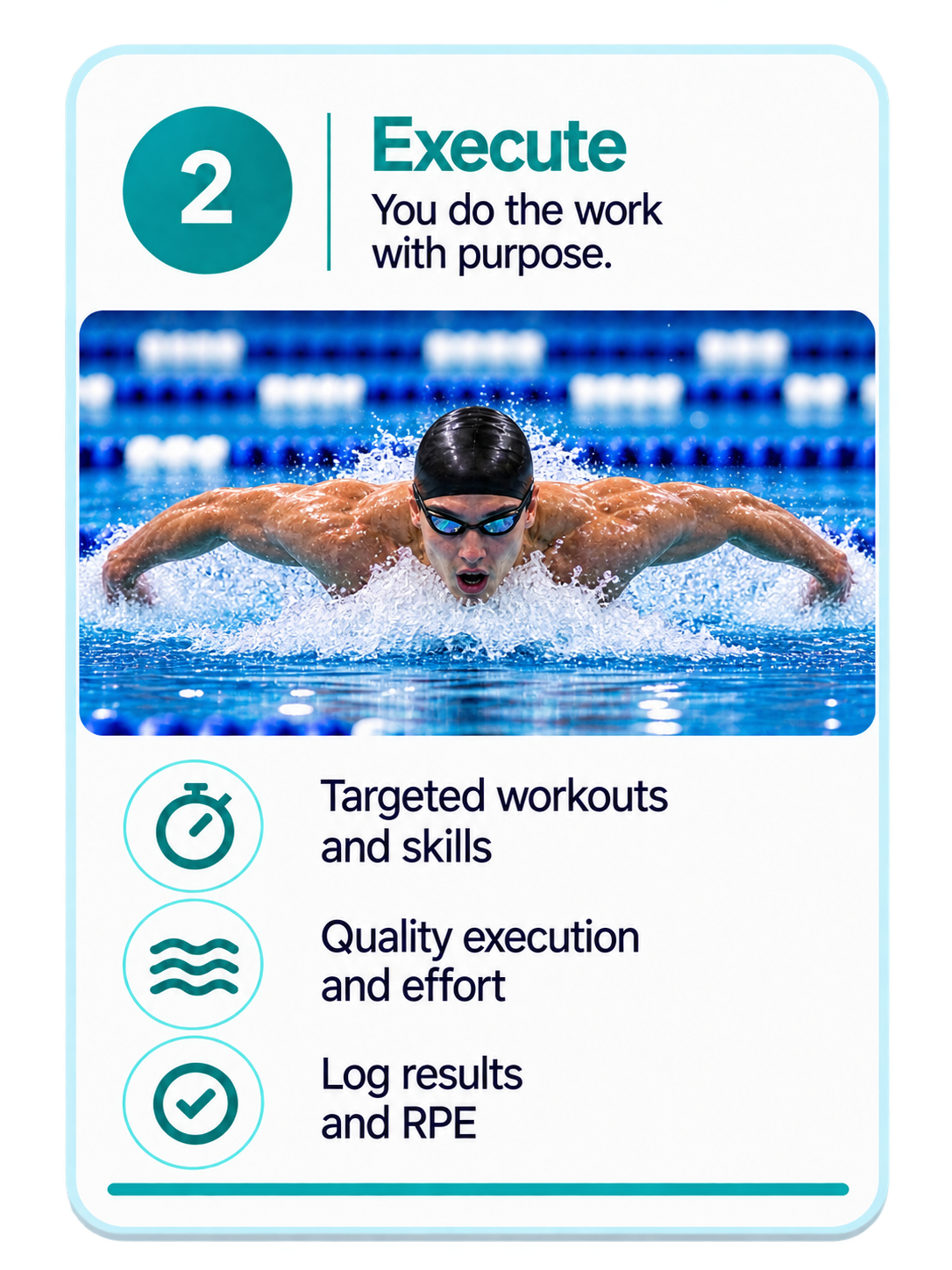
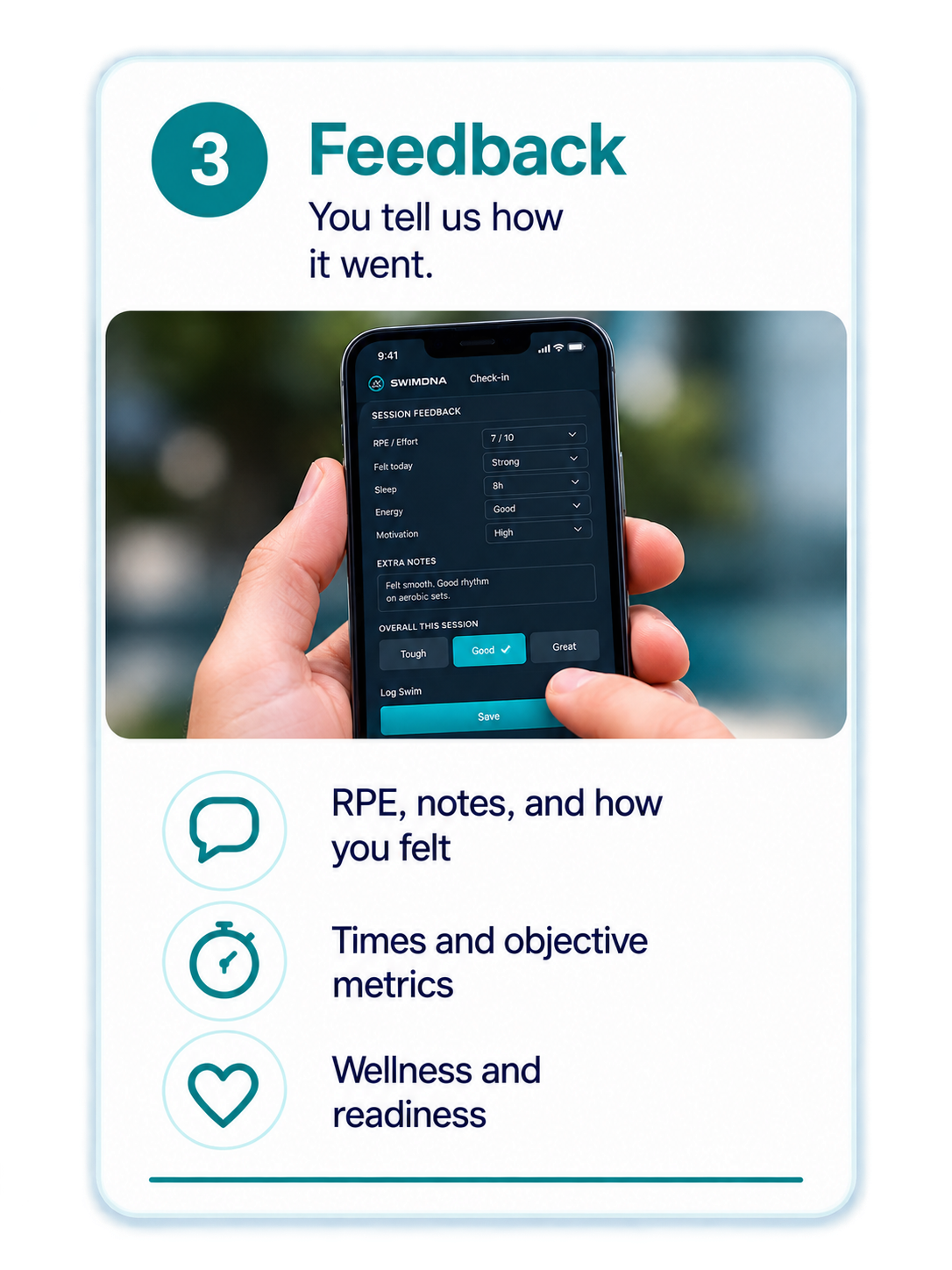
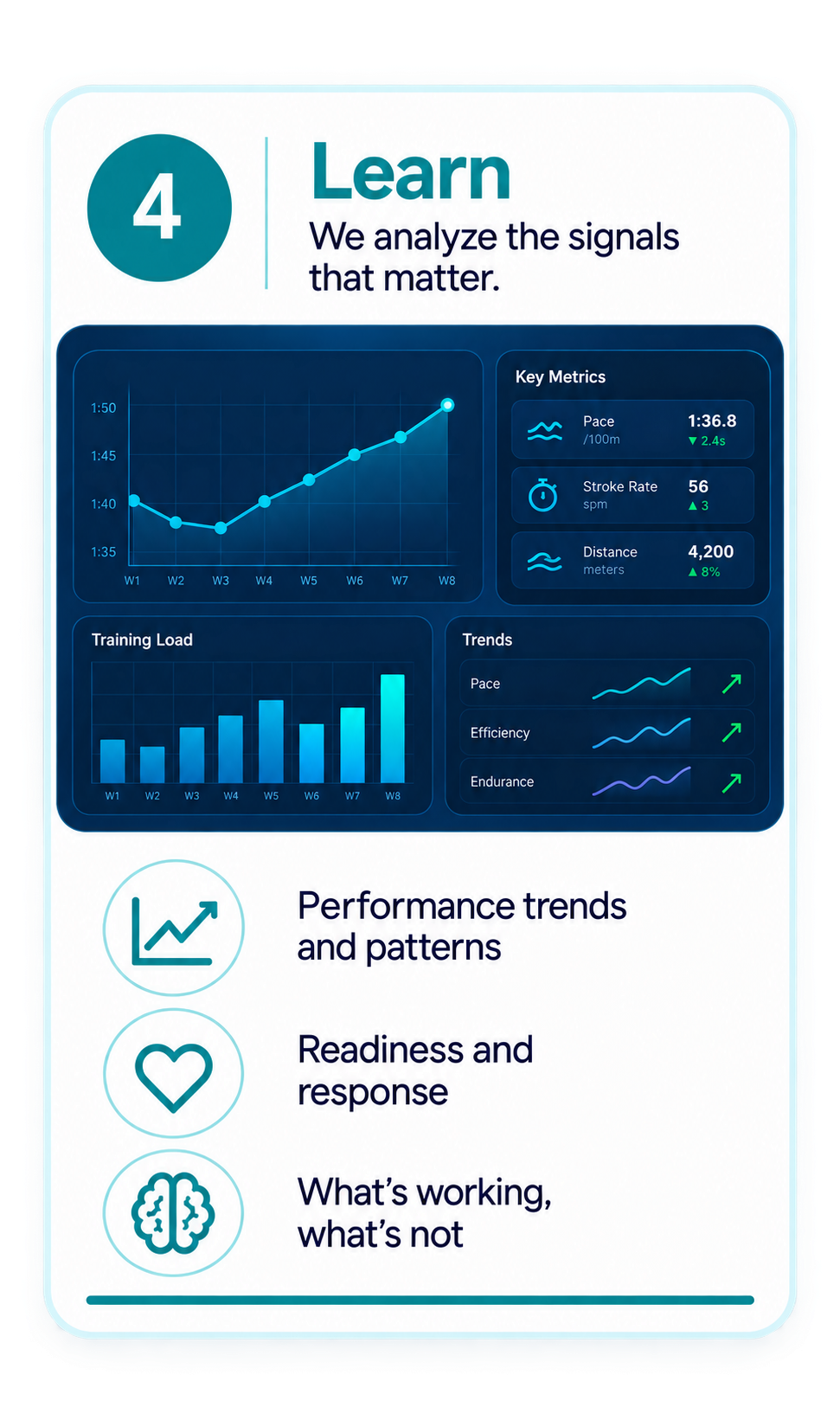
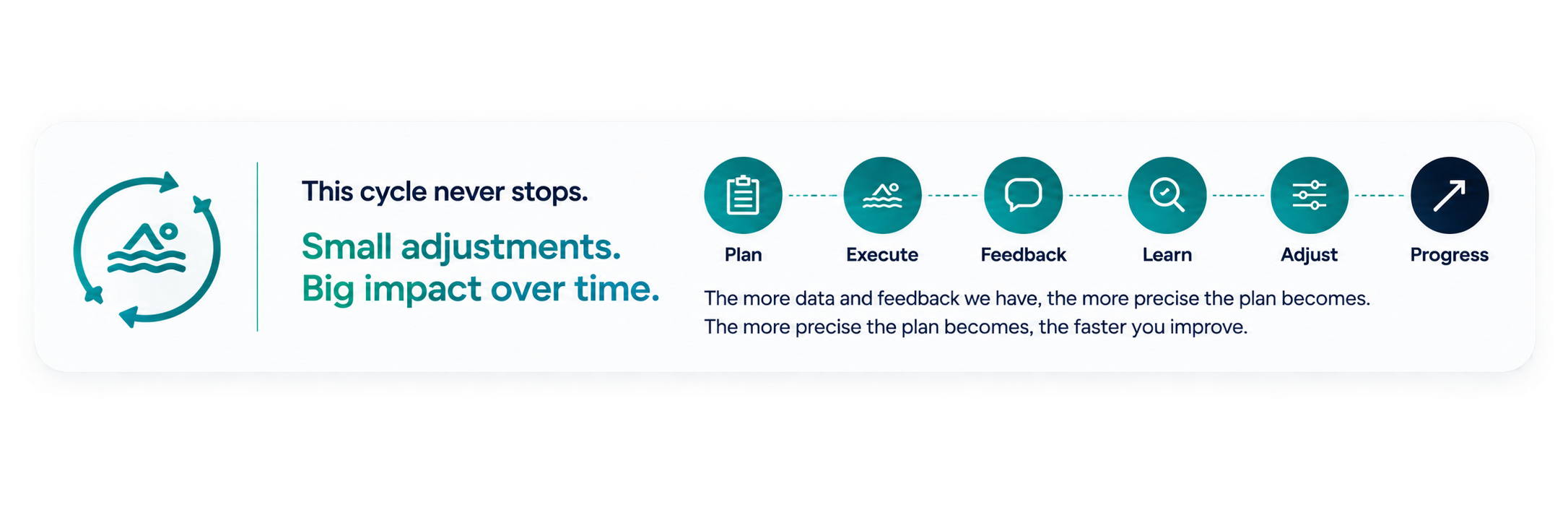
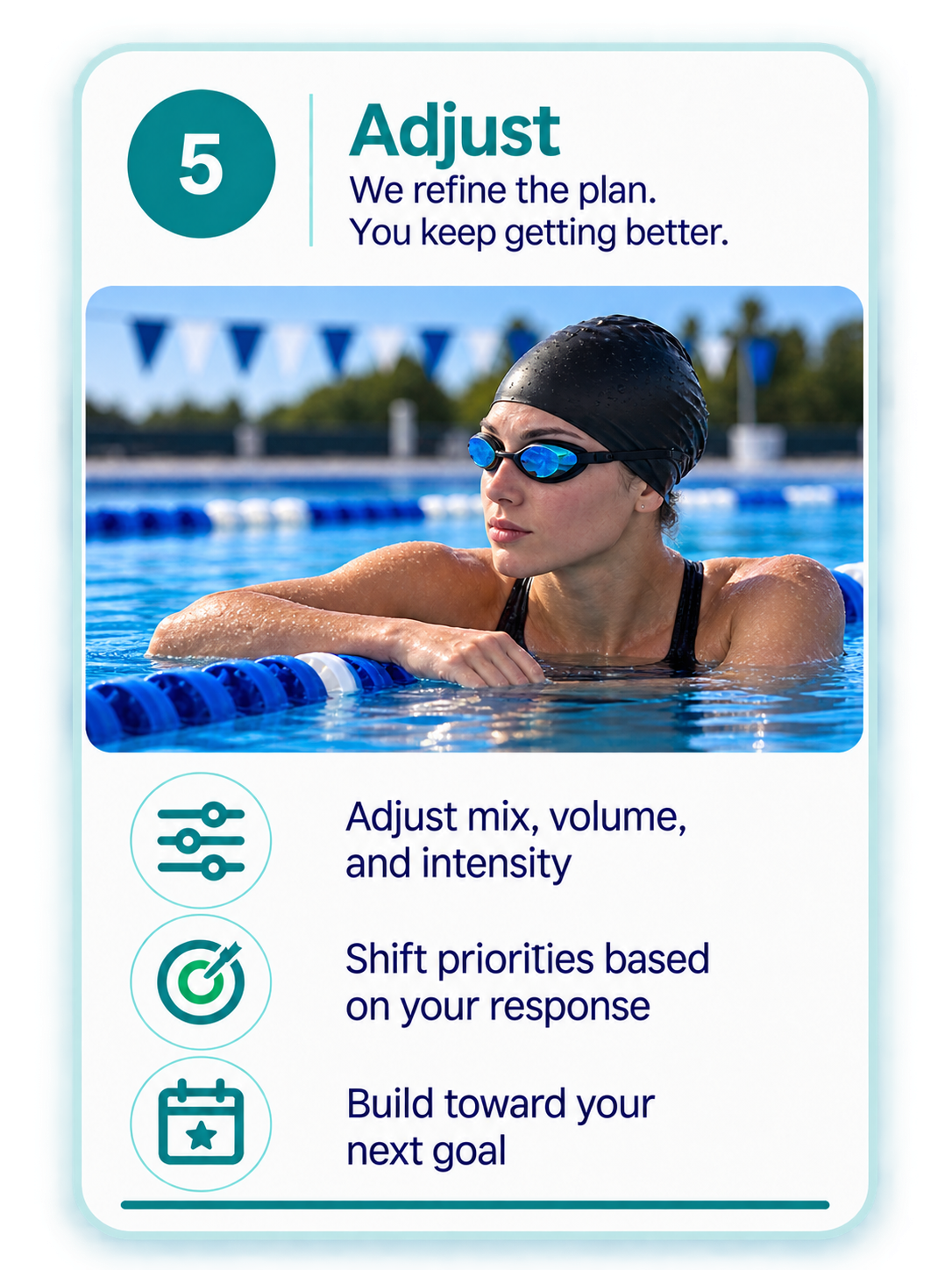
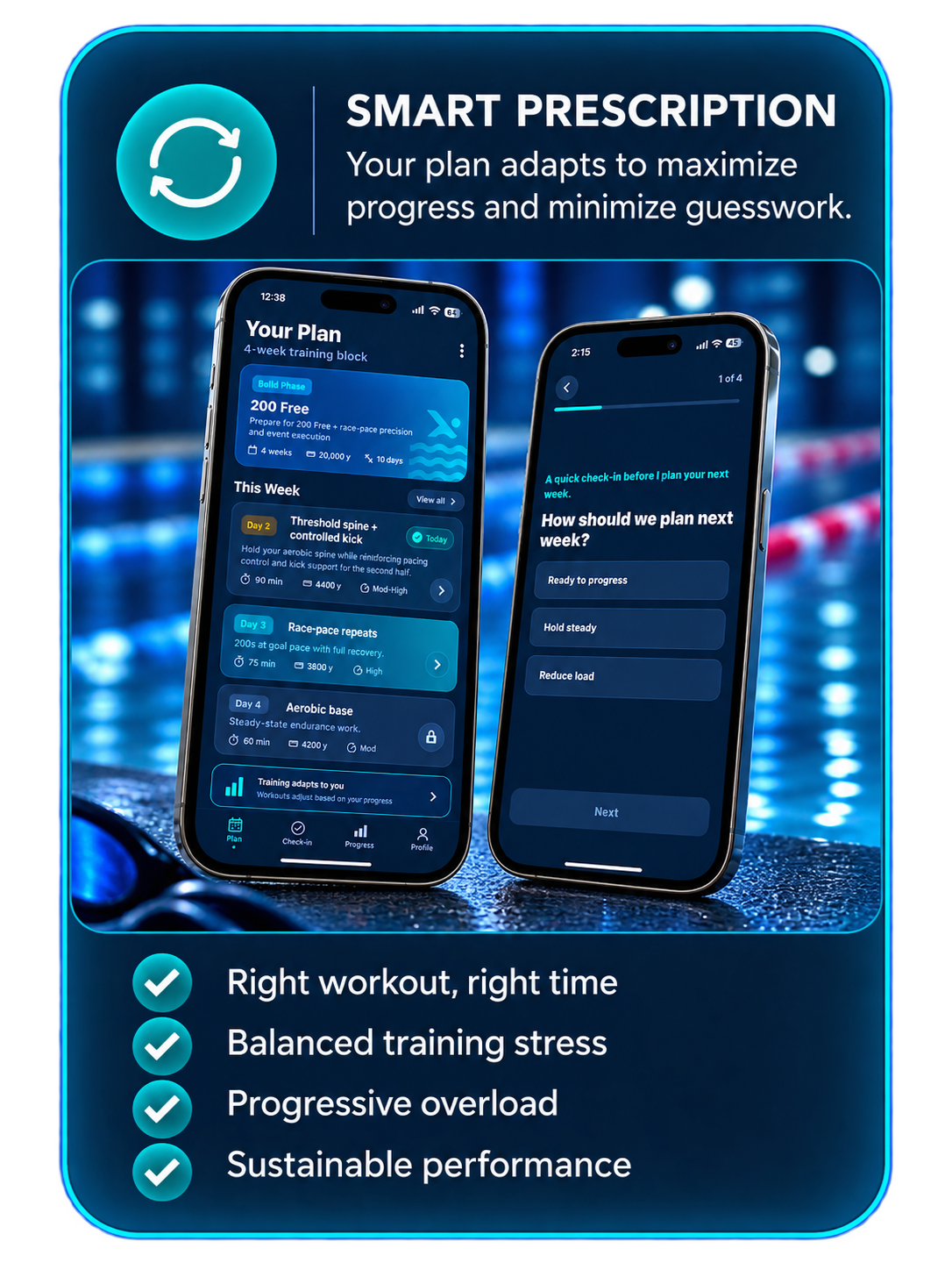
Training is a cycle. We plan. You execute. You provide feedback. We learn. We adjust.
The plan evolves with you so you get the right work at the right time.
Science drives
every decision.
THE SCIENCE IN ACTION
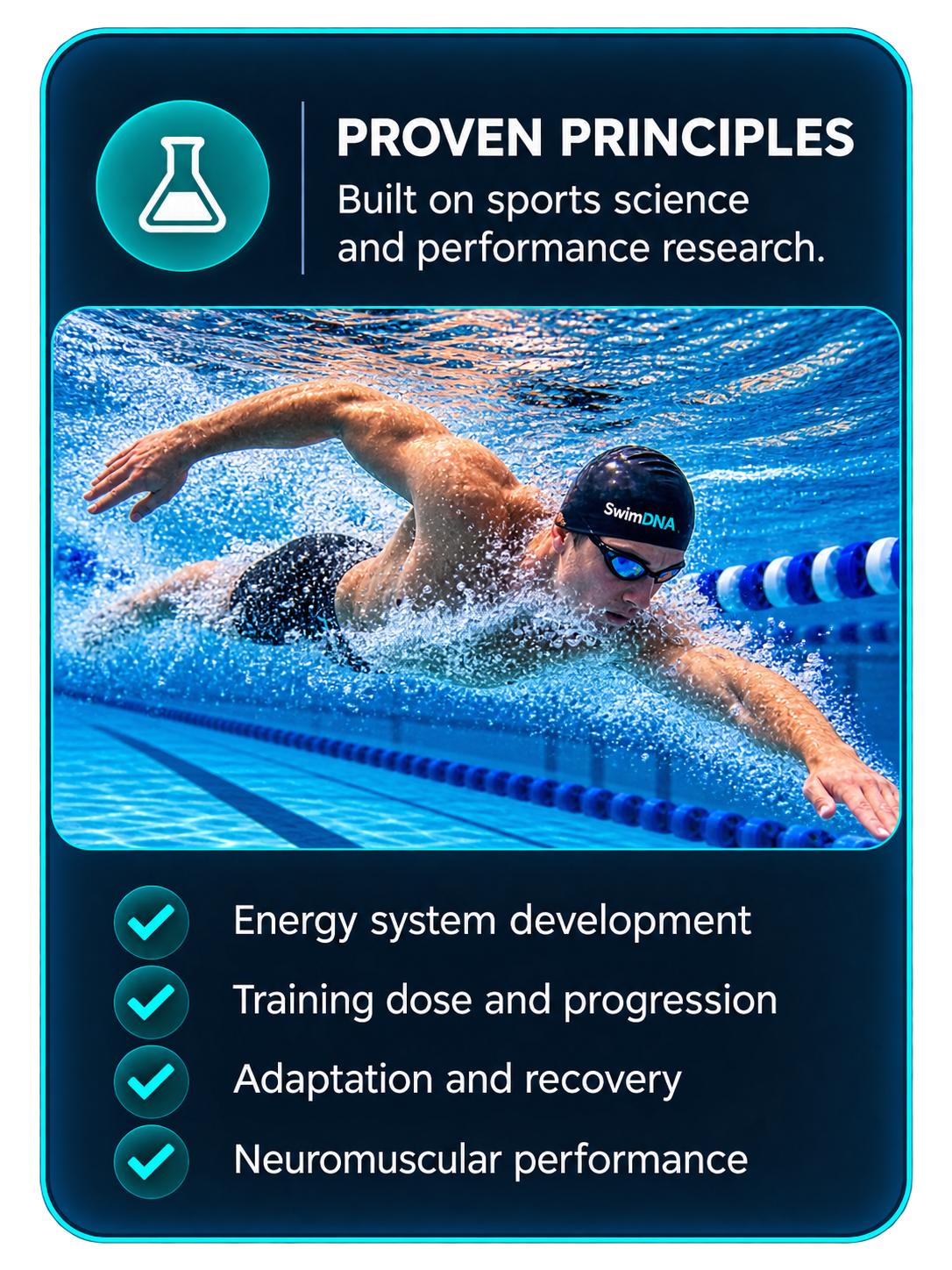
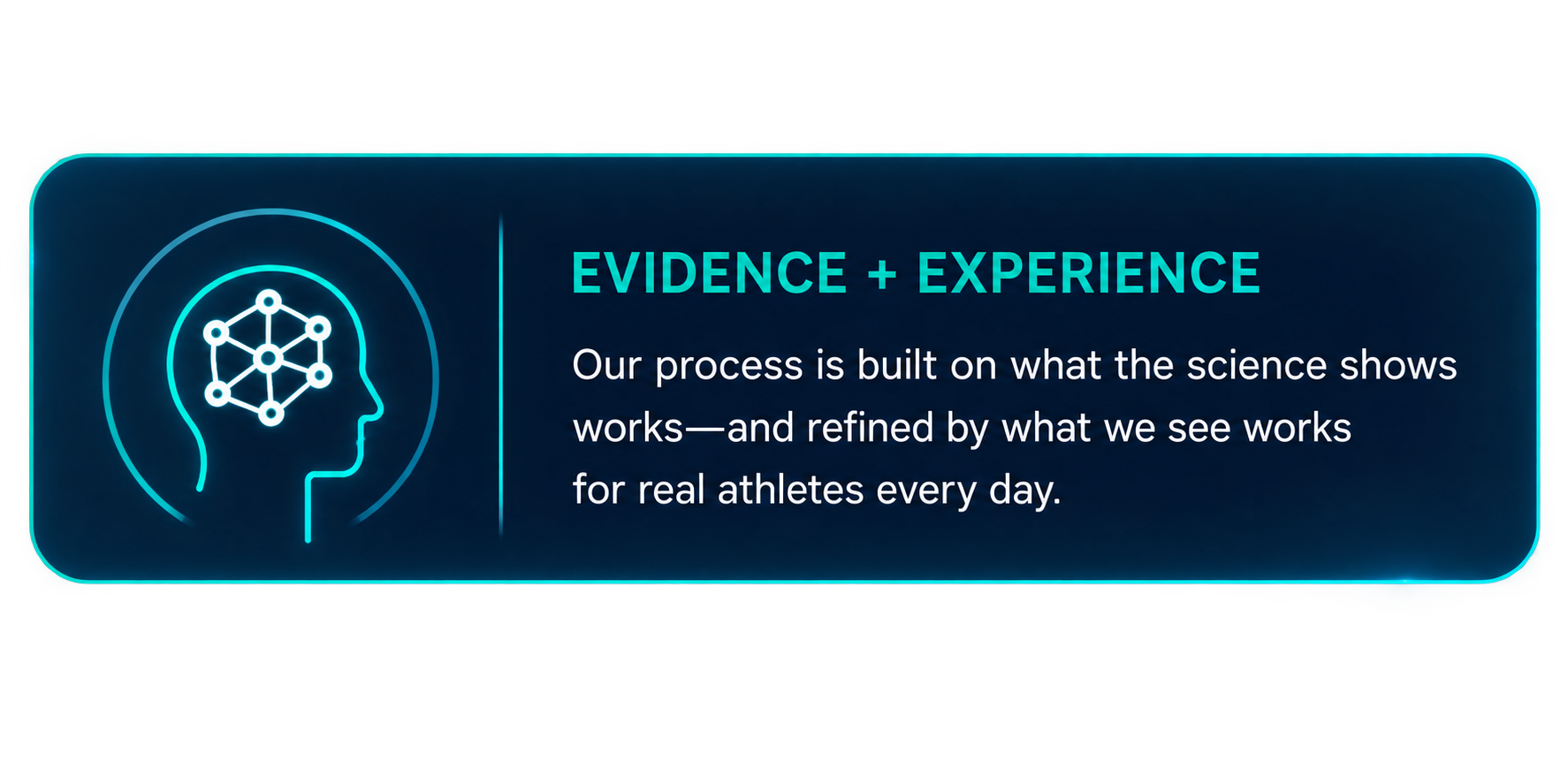
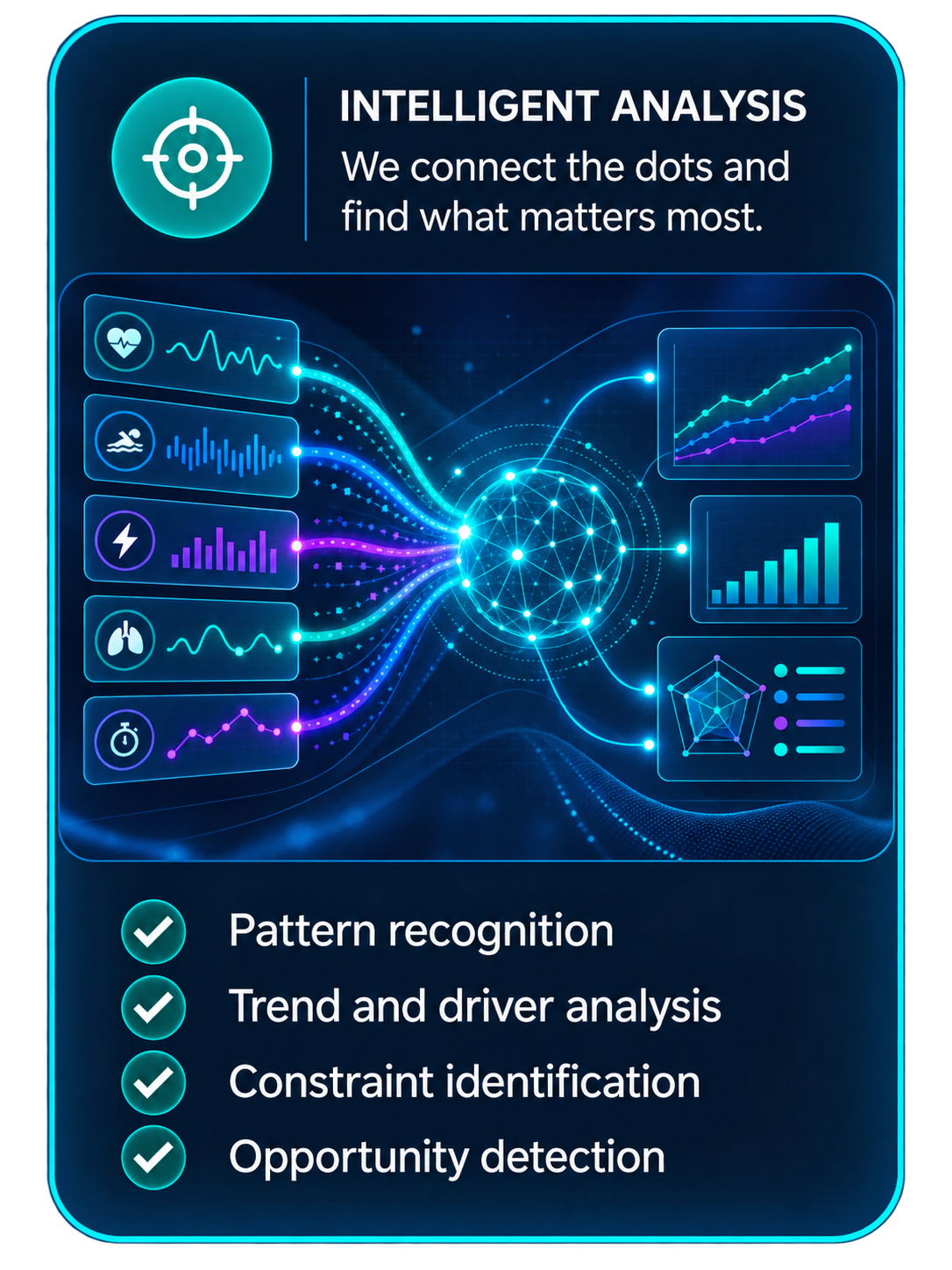
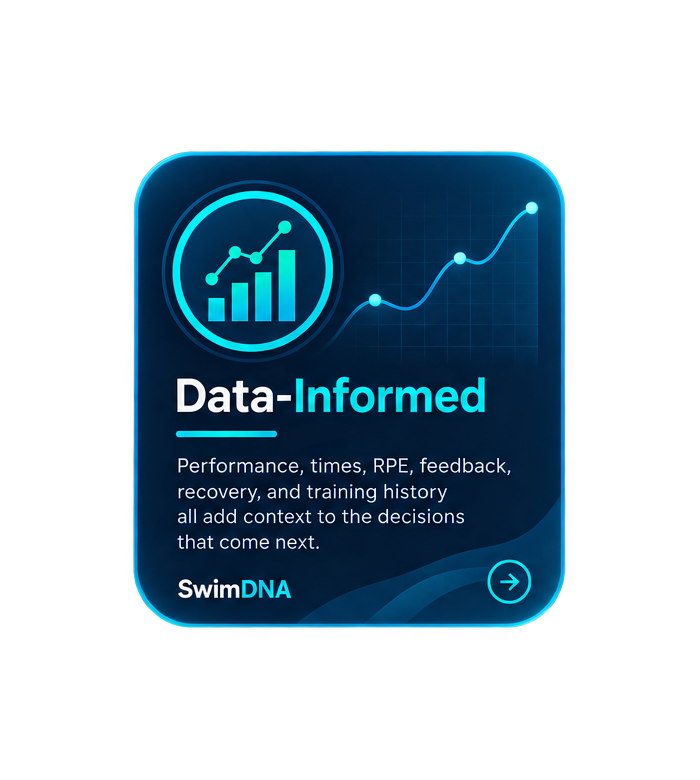
We combine proven training principles, athlete data, and individual response to deliver the right training at the right time.
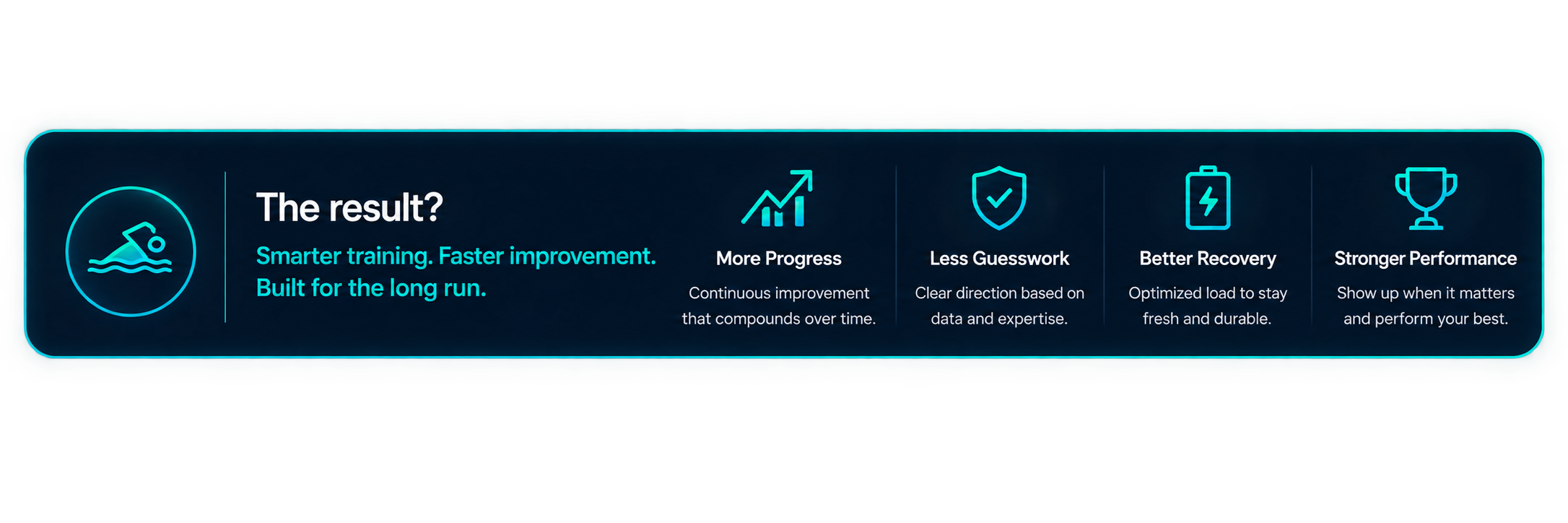
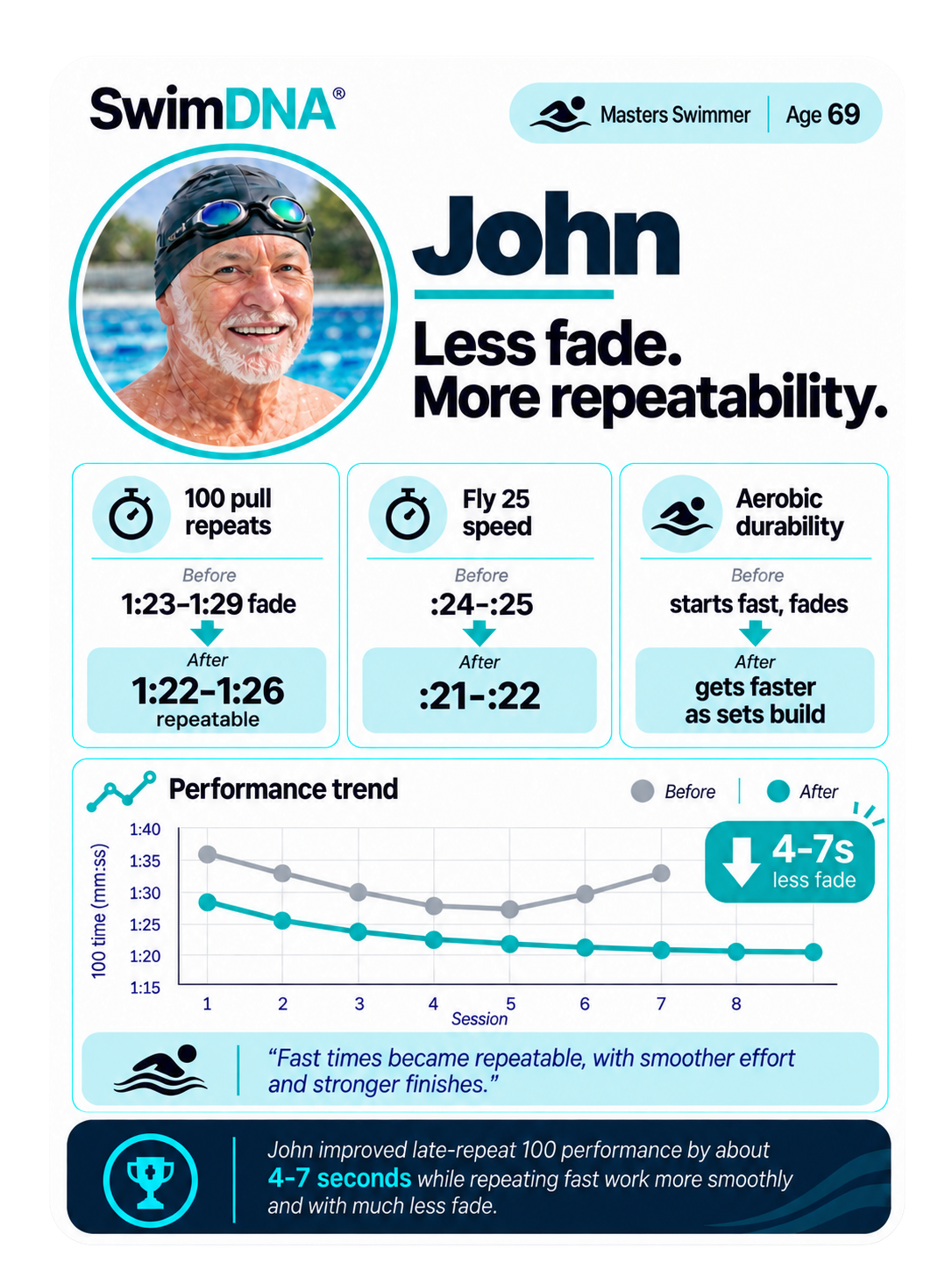
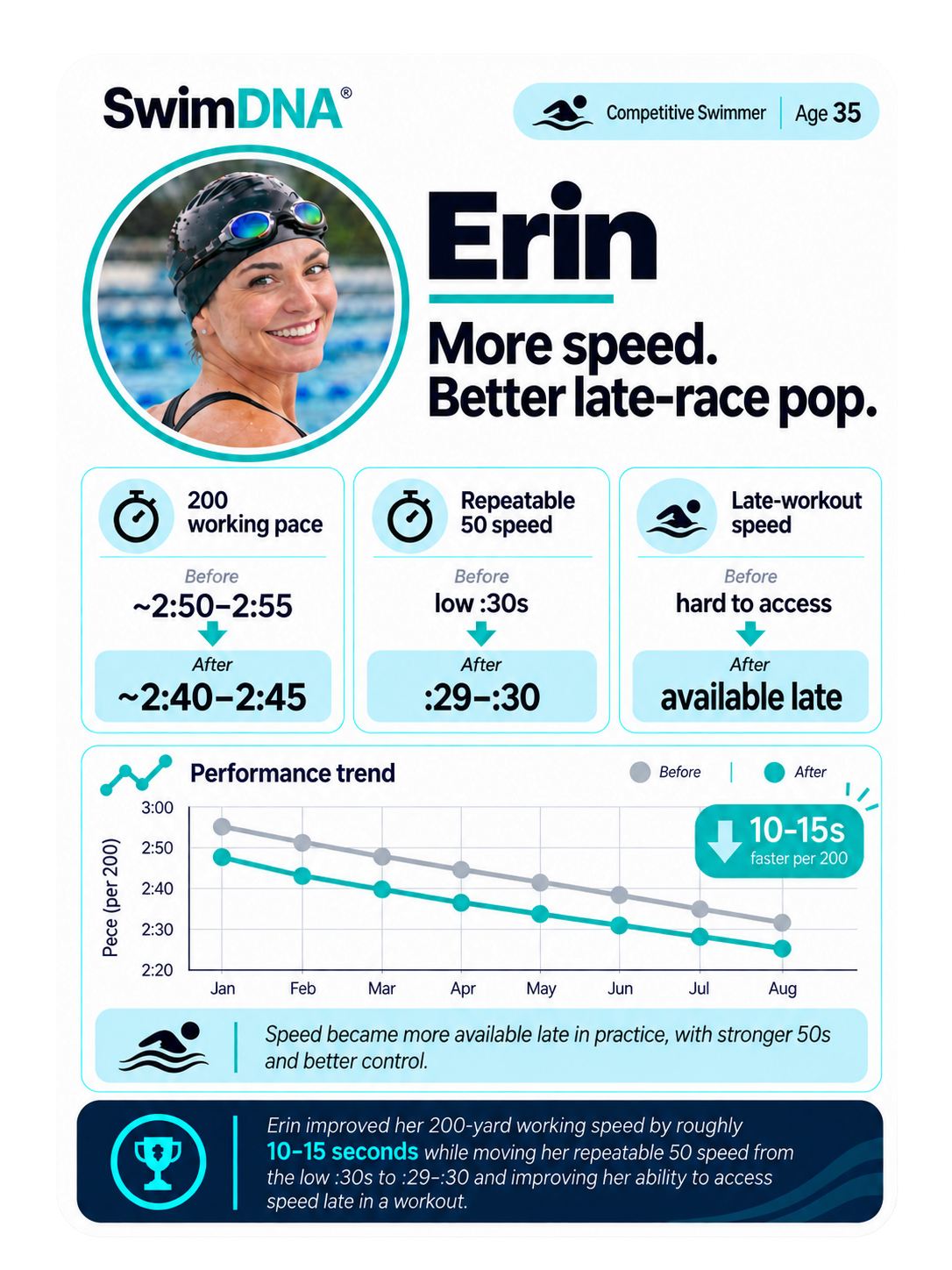
REAL SWIMMERS. REAL RESULTS.
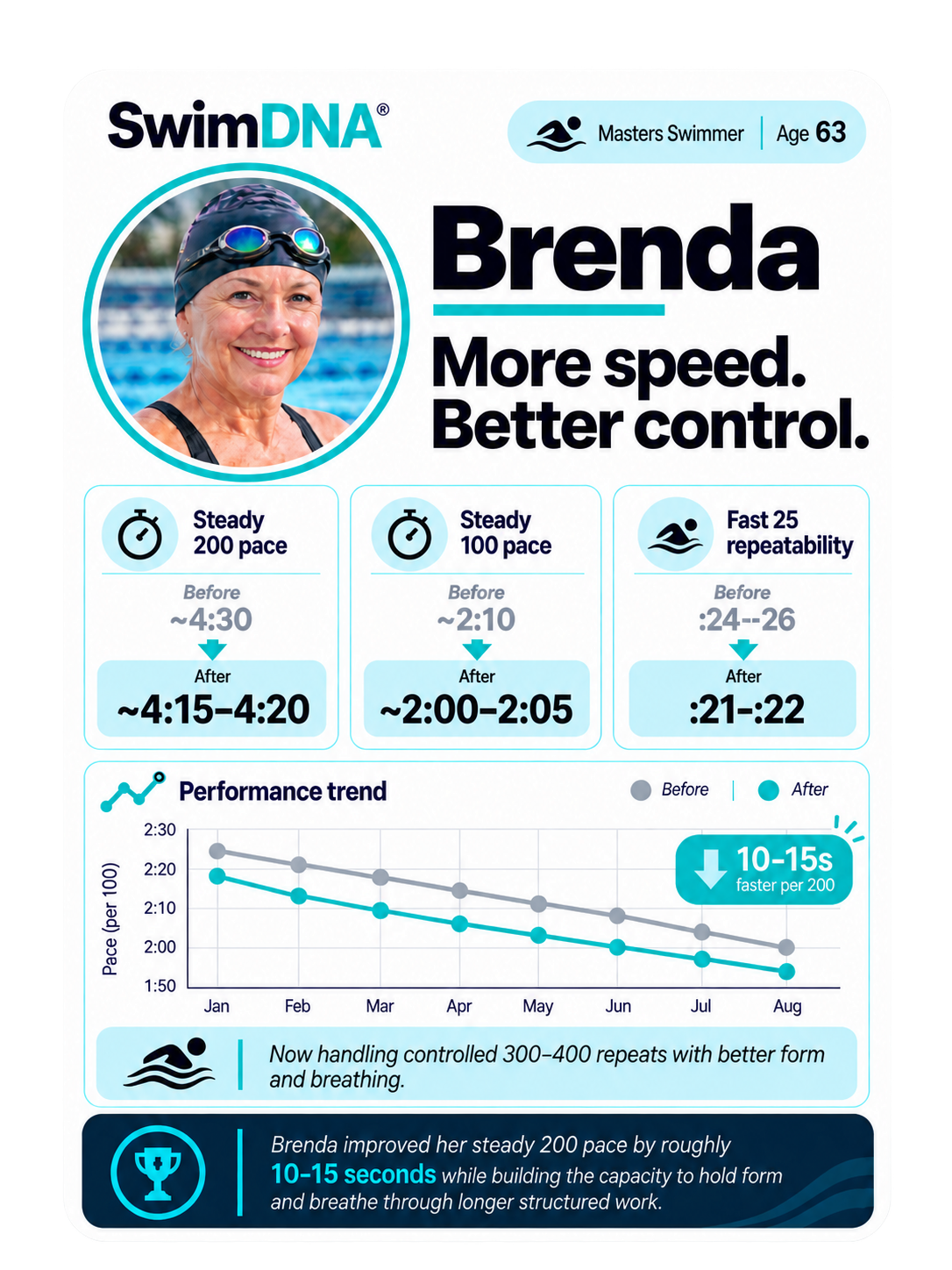
Proven progress with SwimDNA.
THE KNOWLEDGE BEHIND SWIMDNA
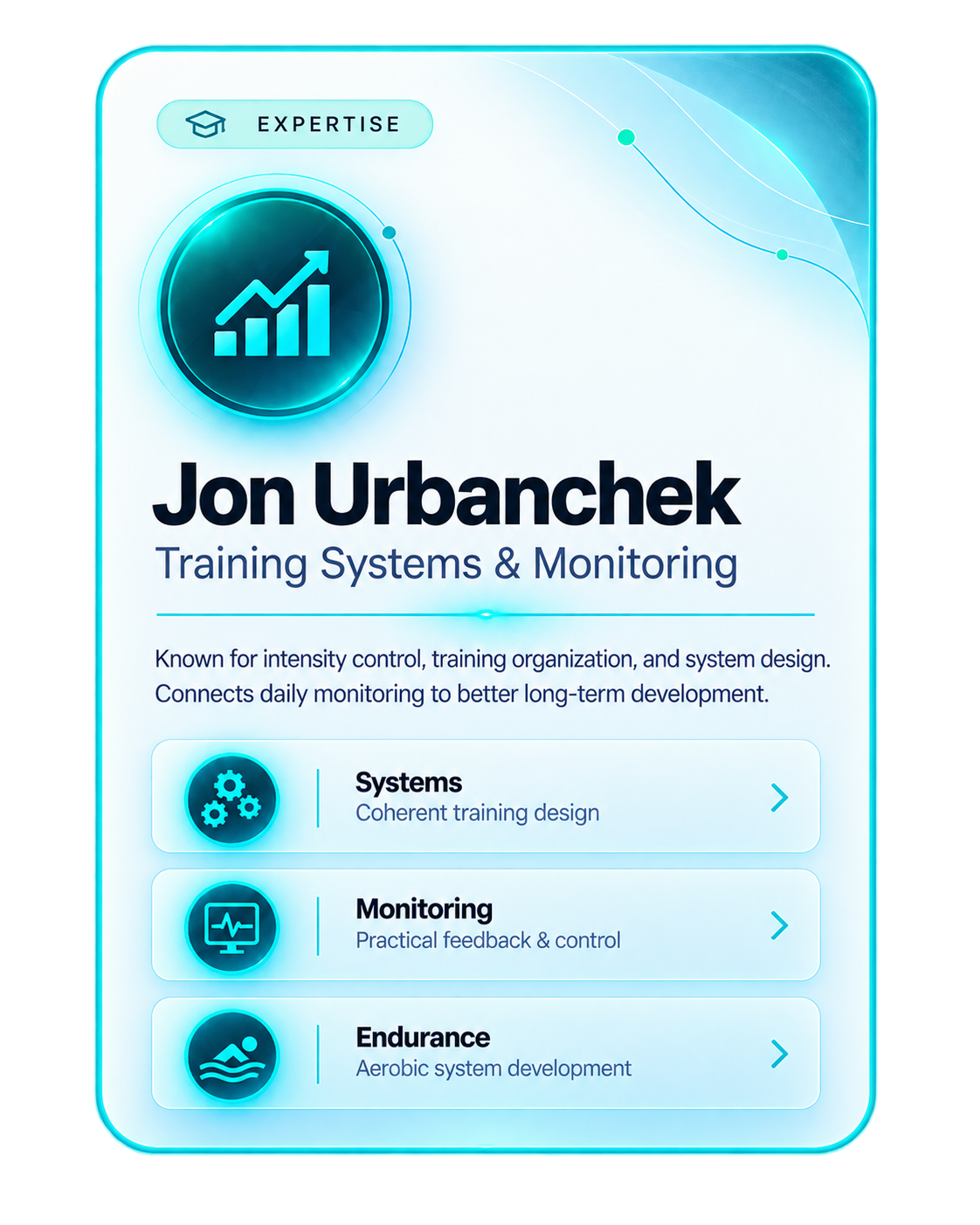
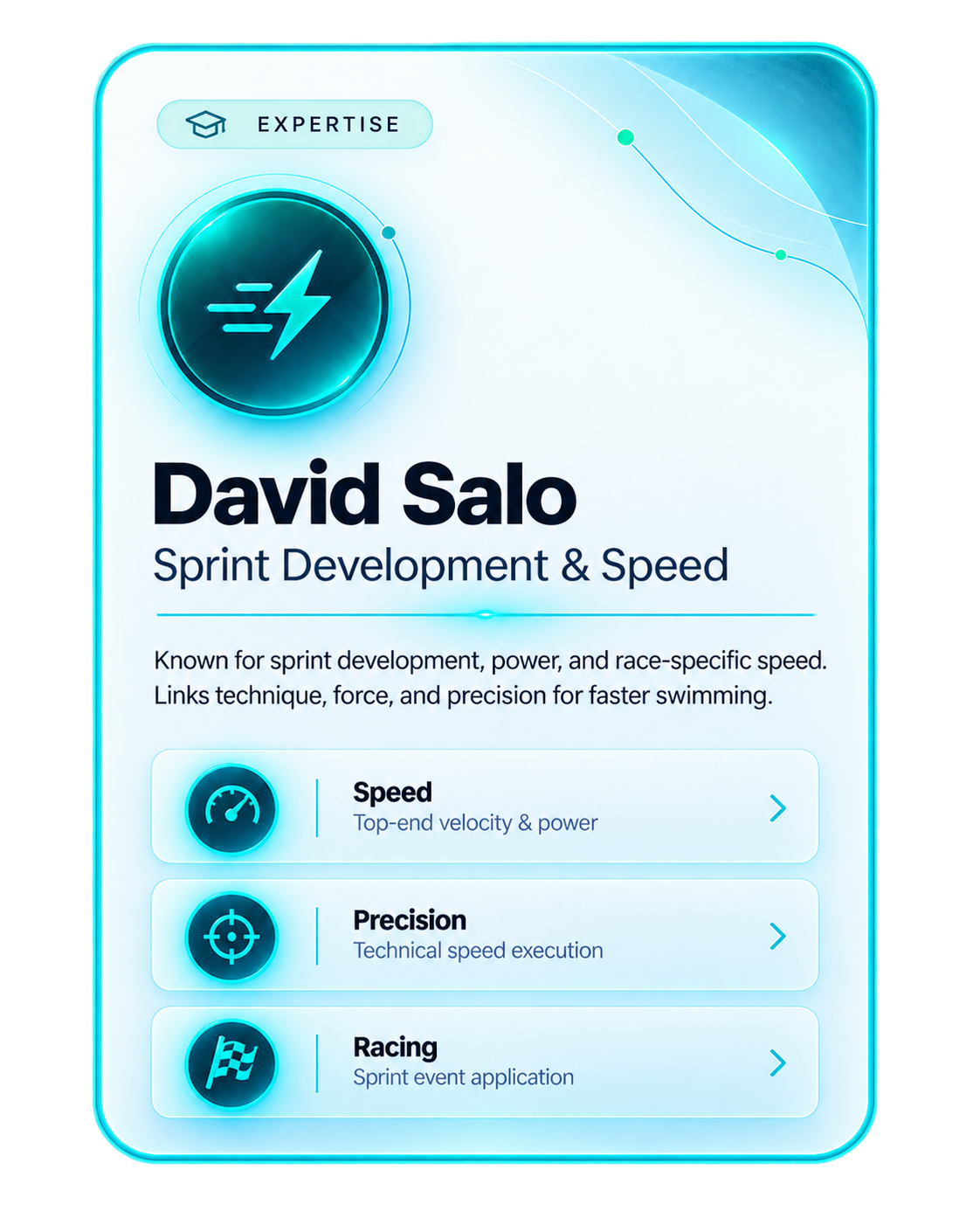
SwimDNA draws from decades of swimming science, exercise physiology, periodization, strength and conditioning, and applied coaching practice.
We don’t follow one training philosophy or copy one coach’s system. We combine established principles, then apply them to the swimmer, the event, the training phase, and the response to training.
Built on science.
Applied to you.
THE EXPERTISE WE STAND ON
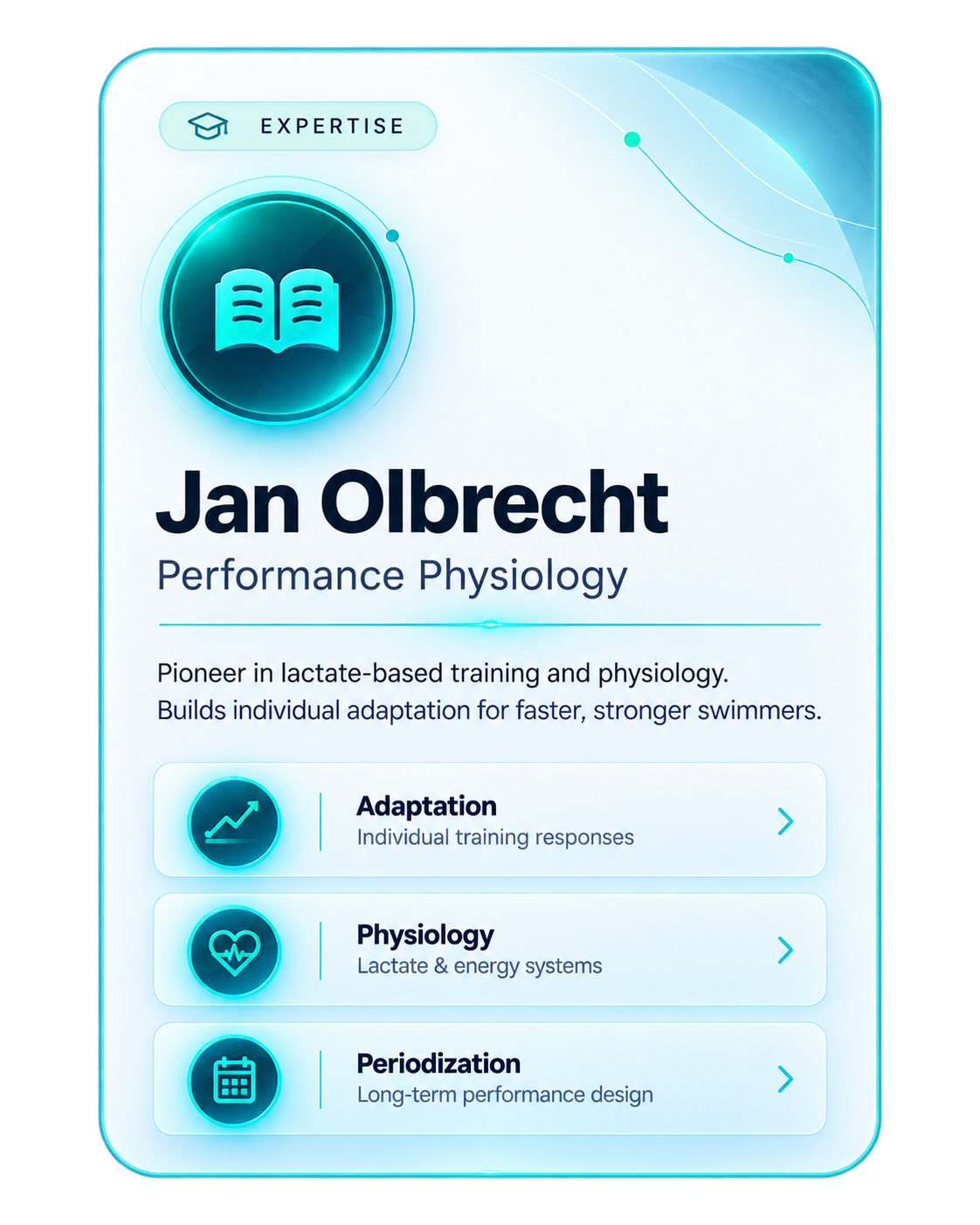
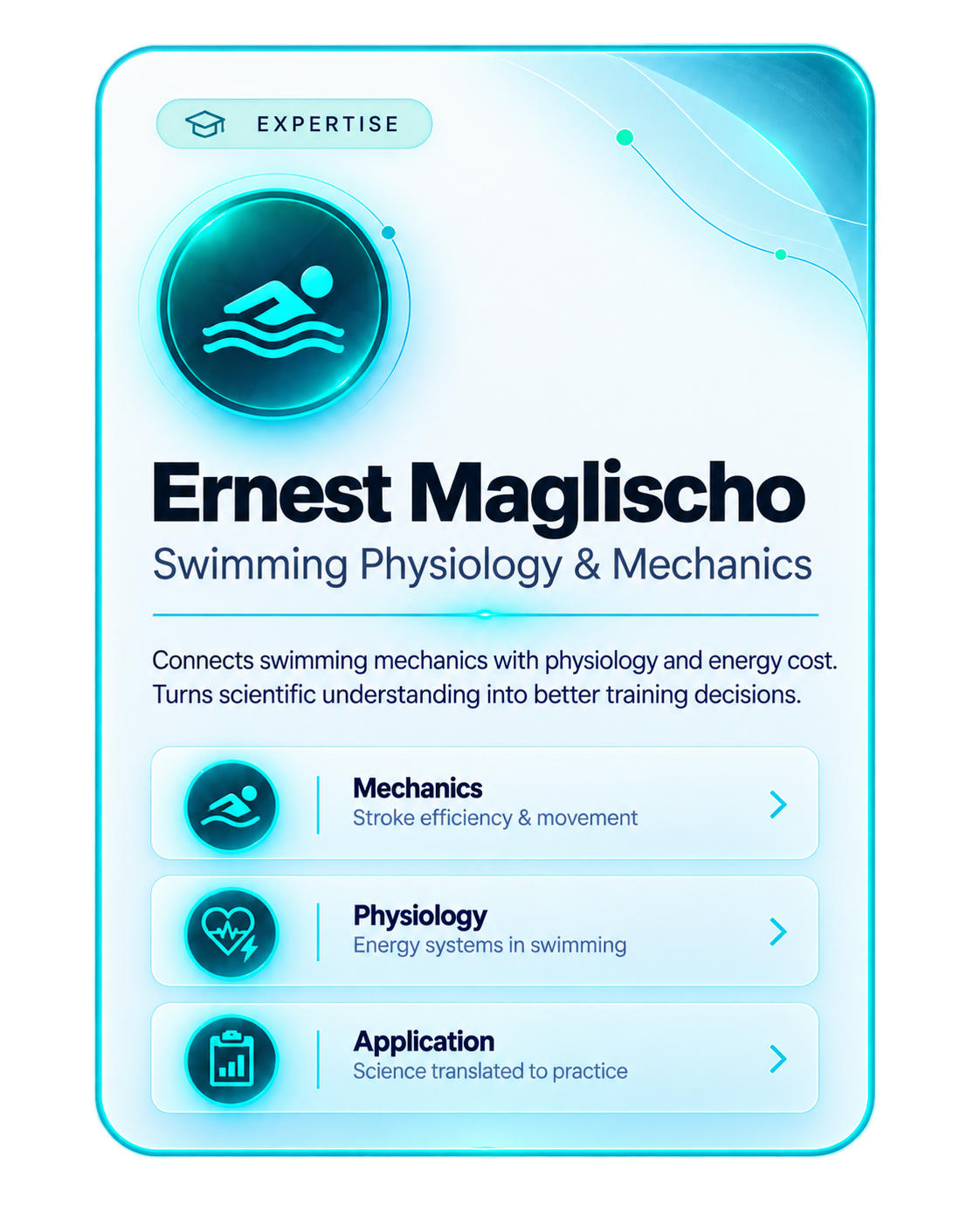
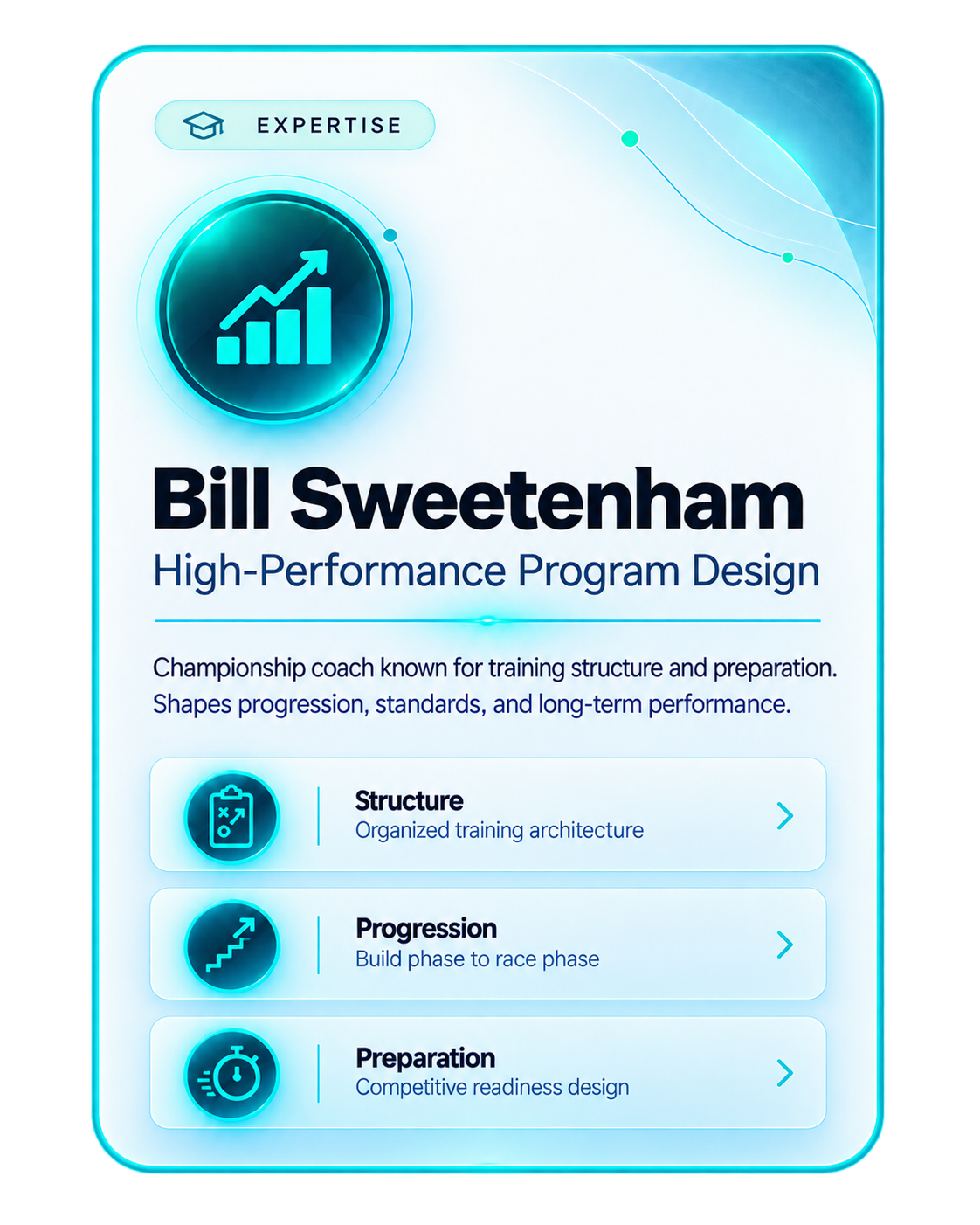
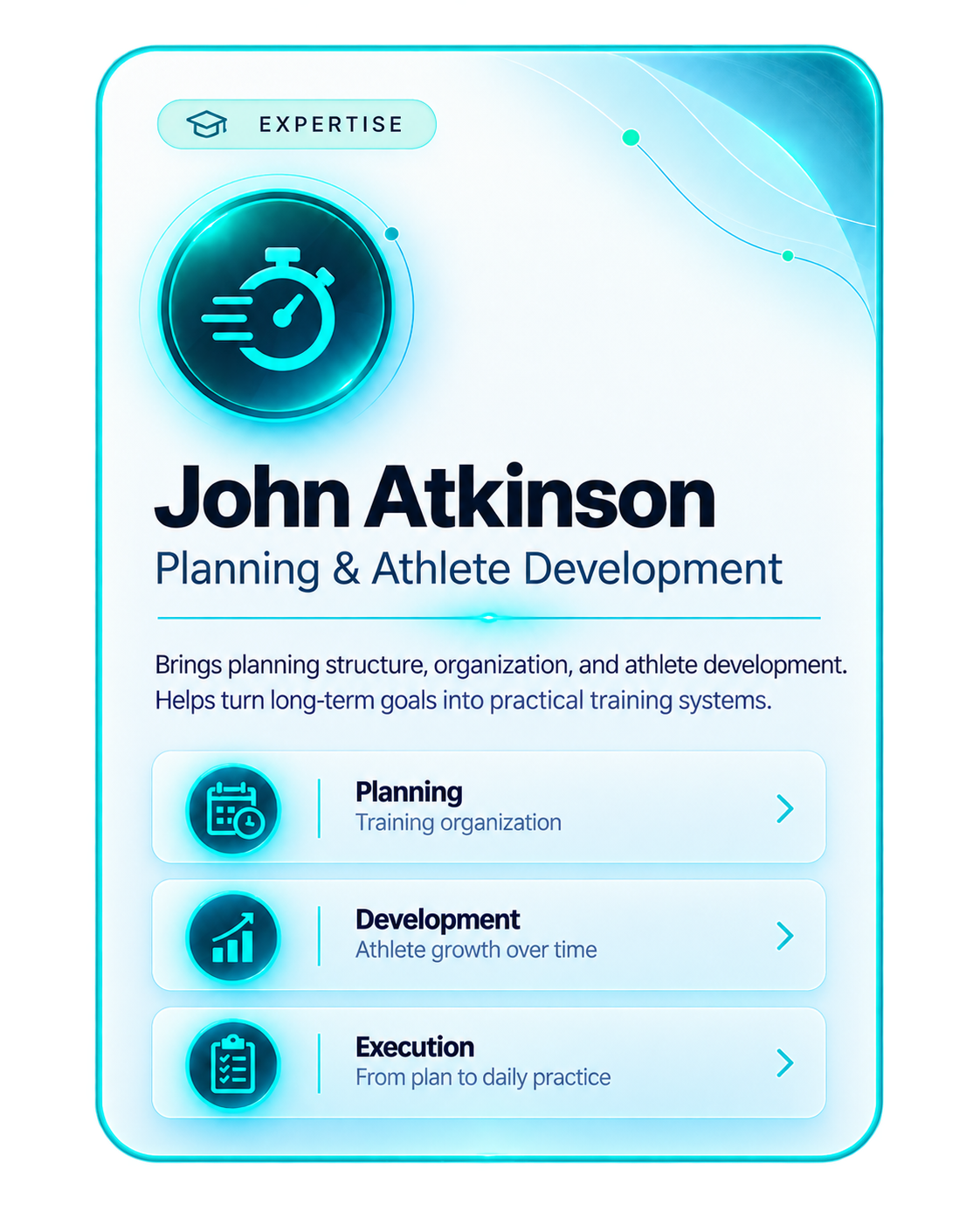
THE PRINCIPLES WE APPLY
*References to authors, coaches, researchers, and organizations reflect sources studied in the development of SwimDNA’s training methodology and do not imply endorsement, sponsorship, or affiliation.
The science matters.
What matters more is how it’s applied to you.
SwimDNA combines decades of proven knowledge with adaptive training to help you become your fastest.